The modern professional demands more than just a desk; they require a sanctuary. When the lines between work life and personal comfort blur, the design of your home office becomes critical to sustained focus and overall well-being. Furnlyra approaches this space not as an afterthought, but as a curated extension of your living environment. True workspace elegance is achieved through deliberate details—the quality of the grain on your desk, the temperature of the light, or the intentional placement of a single piece of art. It is about moving beyond mere utility to create an environment that actively supports creativity and calm.
Establishing Scale: The Foundation of Function
The first step in elevating any office space is defining its footprint correctly. Before selecting a desk, accurately map the room’s dimensions to determine the ideal scale for your primary working surface. A common mistake is opting for overly large, imposing pieces that overwhelm smaller rooms; conversely, choosing something too minimal can feel inadequate. For most focused professionals, a depth of 75cm to 80cm provides adequate elbow room while maintaining visual lightness. If space is constrained, consider floating or wall-mounted desks, which offer surface area without consuming floor space.
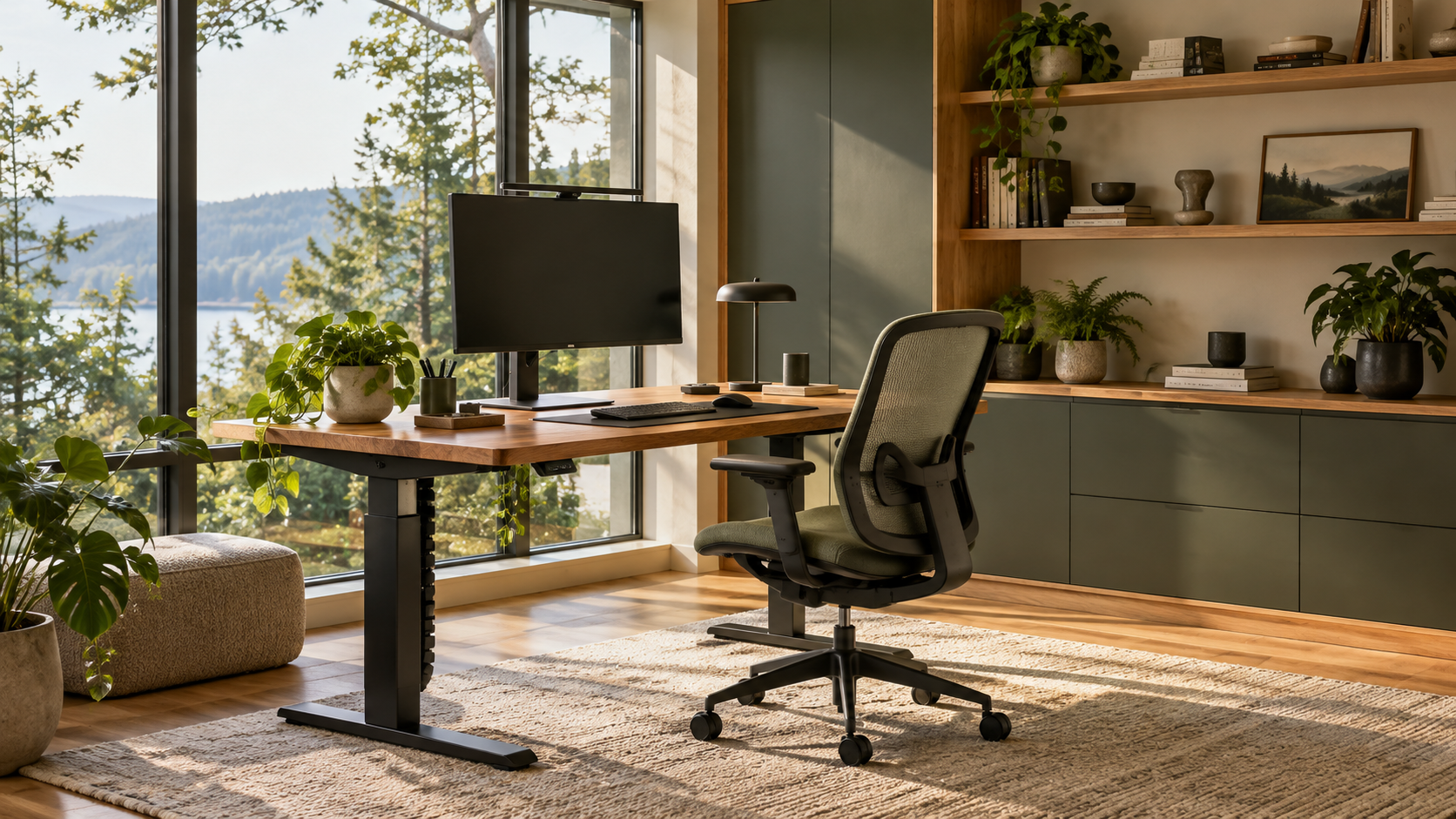
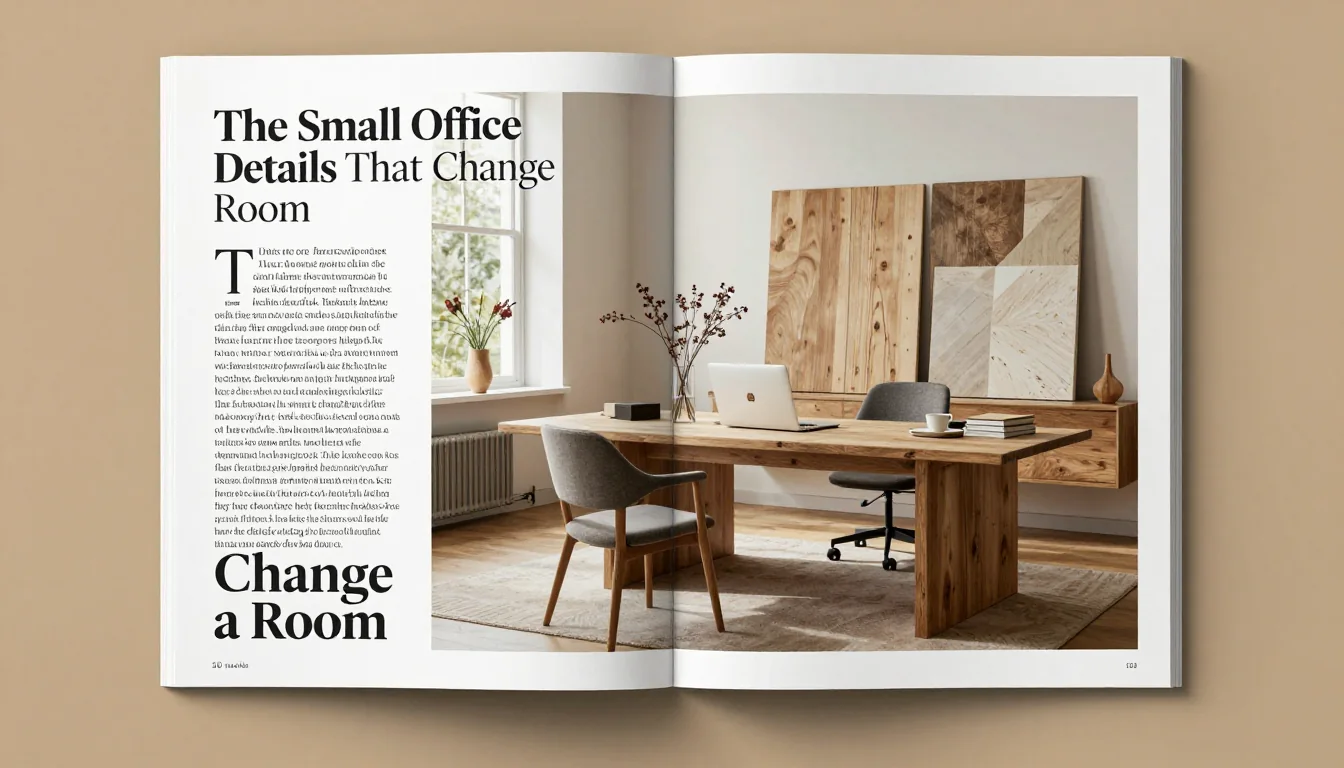
The chair and desk must work in harmony, making ergonomics a design consideration rather than merely a health requirement. Invest in an ergonomic chair with adjustable height and lumbar support depth (ideally 10-15cm of curvature). When pairing it with a desk, consider the material finish: solid walnut or oak introduces immediate organic warmth, grounding the space against technology. A sleek metal frame paired with natural wood surfaces offers durability while keeping the aesthetic refined—a critical trade-off if you prioritize industrial longevity over deep warmth.
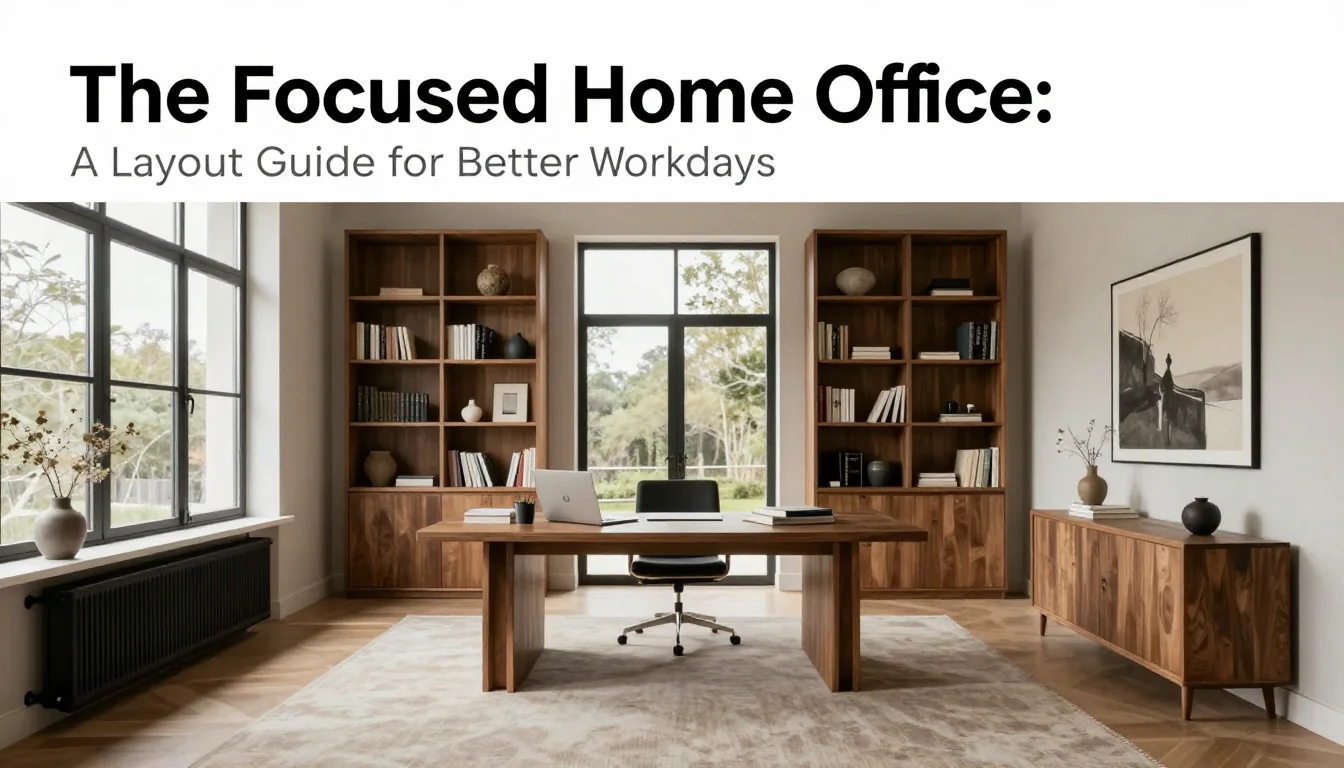
When selecting foundational pieces, always test their relationship to the room’s existing architecture. If your office is a narrow corner nook, a desk with tapered legs will feel less heavy than one with bulky supports. Furthermore, consider how much vertical space you require; ensure that any chosen shelving unit or credenza aligns proportionally with the height of the ceiling and the back of your chair to maintain visual balance.
Layering Atmosphere: Light, Texture, and Biophilia
Moving beyond structure, atmosphere is built through sensory layering. The most powerful tool here is lighting; ditch harsh overhead fluorescents in favor of a composite system. You need three types: task light (focused on the immediate workspace), ambient light (a soft glow filling the room's periphery), and accent light (highlighting specific textures or art). A floor lamp with an opaque, warm-toned shade (2700K to 3000K) placed in a corner can cast a diffused, comforting halo that instantly transforms the space from clinical to curated.
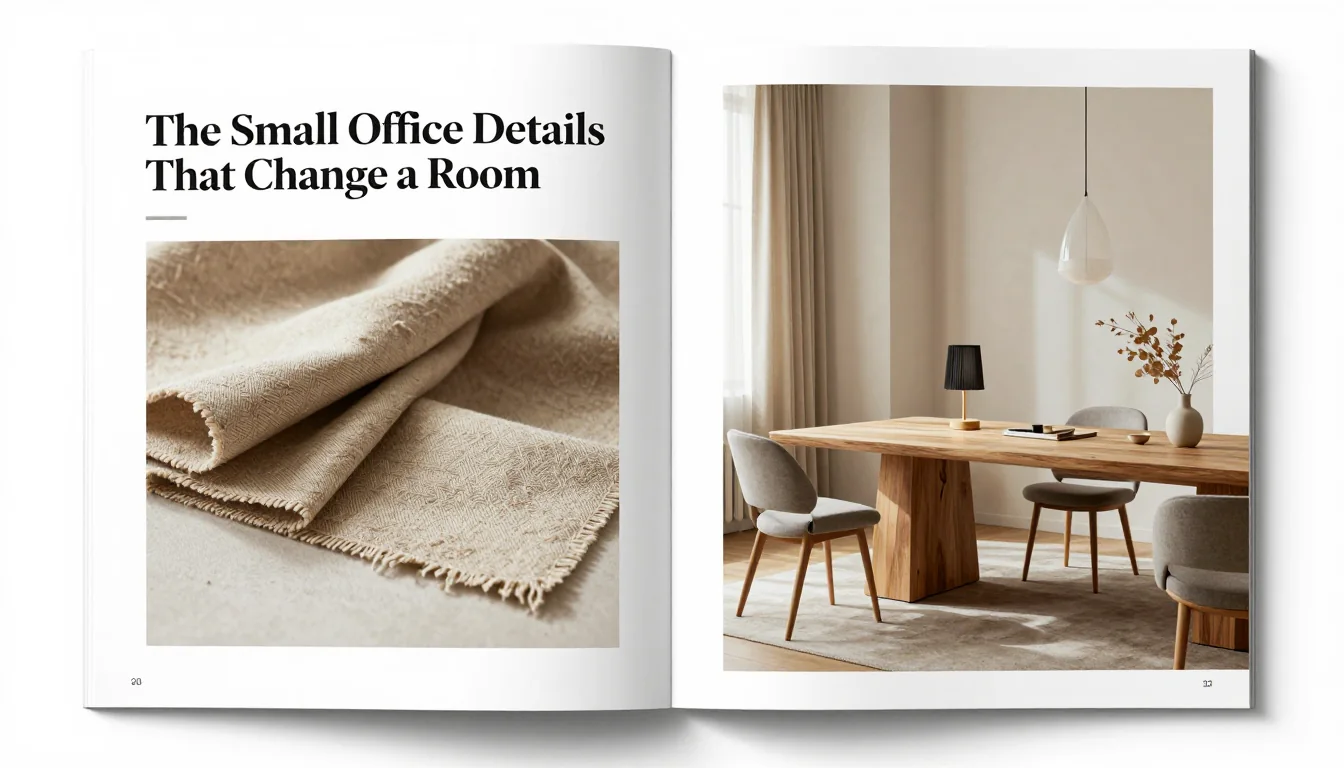
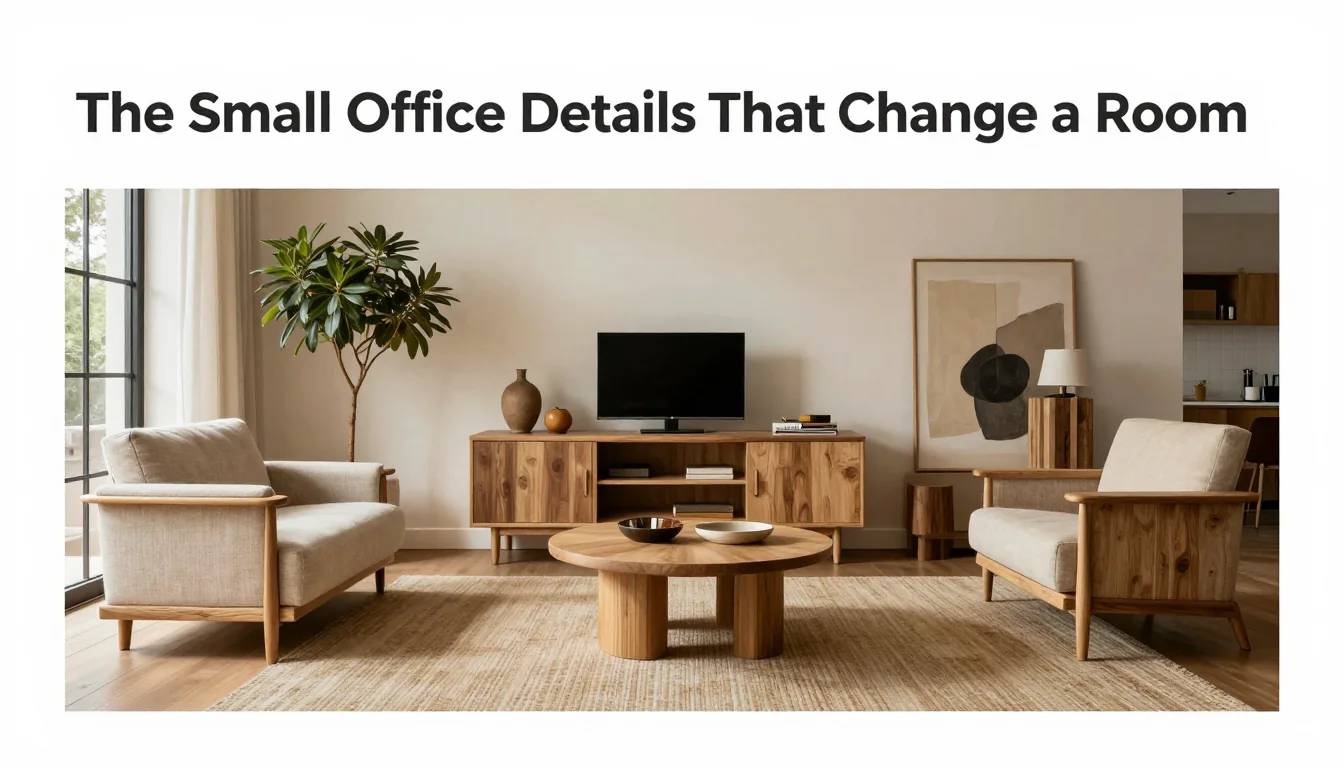
Area rugs are essential for defining boundaries and adding tactile comfort. The rug should be substantial enough that at least the front two legs of your desk and chair rest upon it. A size around 180cm x 240cm is often appropriate for a standard corner setup, depending on room scale. Choose materials with texture—wool or jute blends over synthetic fibers—to introduce depth. The rug’s pattern should complement the furniture without competing with the necessary visual order of your workspace.
Introducing biophilic elements connects the focused environment to natural calm. Plants are far more than decoration; they provide organic shapes and subtle psychological benefits. For low-maintenance office settings, consider Snake Plants or ZZ plants. Place them strategically: a medium-sized specimen on a credenza adds height, while smaller succulents can be grouped in ceramic trays near window light. When introducing greenery, ensure the pots match your room’s material palette—terracotta for earthiness, matte stone for modernity.
Refining Flow: Organization and Personalization
An impeccably designed office is one that appears composed even when in use. The key to achieving this is mastering cable management. Visible cords are the fastest way to introduce visual chaos, undermining any effort at sophisticated design. Implement discreet solutions such as under-desk trays, adhesive cord clips along the back edge of the desk, and dedicated power strips routed through grommets. Keeping technology invisible allows your curated details—like a ceramic pen holder or a small stack of beautifully bound books—to take center stage.
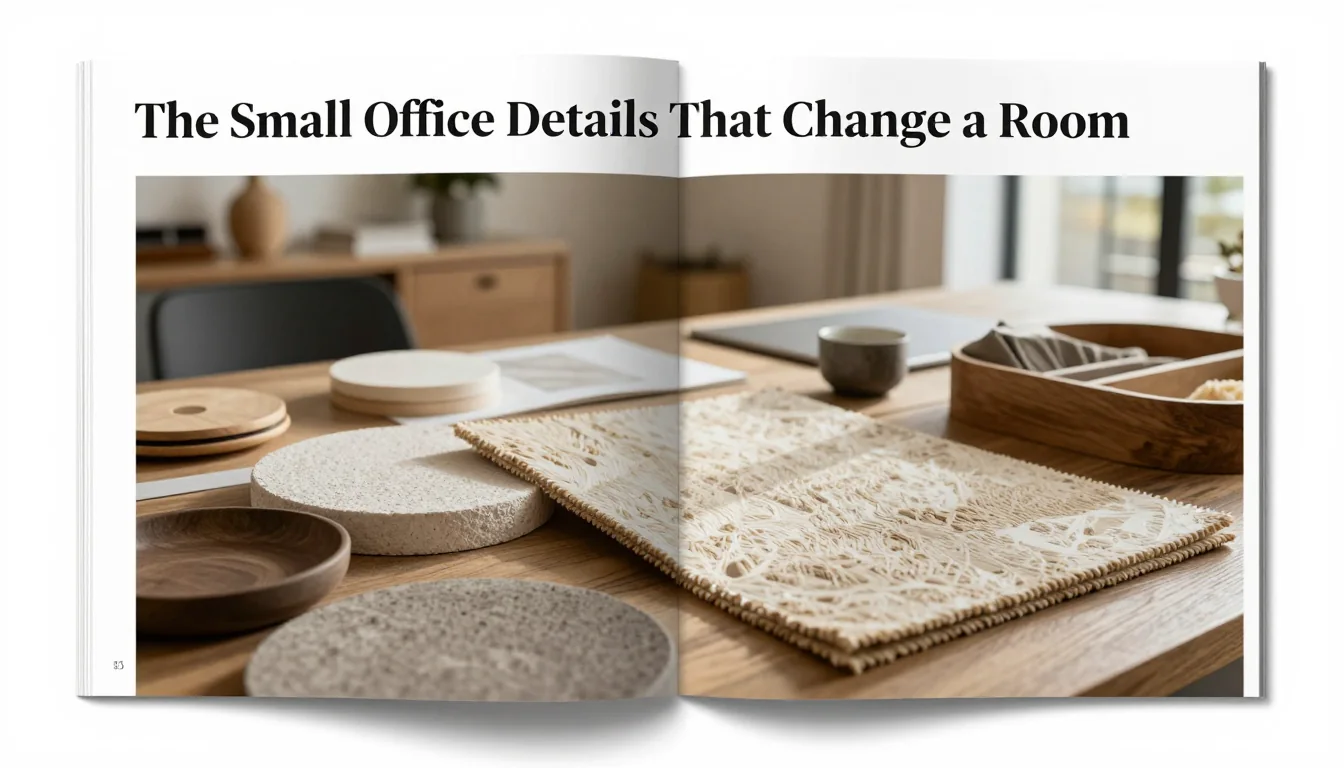
Storage should be integrated seamlessly into the design profile. Instead of relying on standalone plastic bins, opt for closed shelving units in wood finishes that match your desk, thereby minimizing visual clutter. If you must display items, use trays and vertical dividers to group smaller objects (notebooks, charging blocks) into curated vignettes rather than allowing them to sprawl across the surface. This approach turns necessary clutter into intentional composition.
Personalization should feel thoughtful, not haphazard. Instead of scattering random mementos, choose one or two meaningful pieces—a framed photograph, a unique piece of sculpture, or an antique clock—and give them a dedicated spot. These items provide character without sacrificing the sense of professional calm. The trade-off here is discipline: you must commit to curating and regularly editing your display to ensure that personal touches elevate the room rather than distract from it.