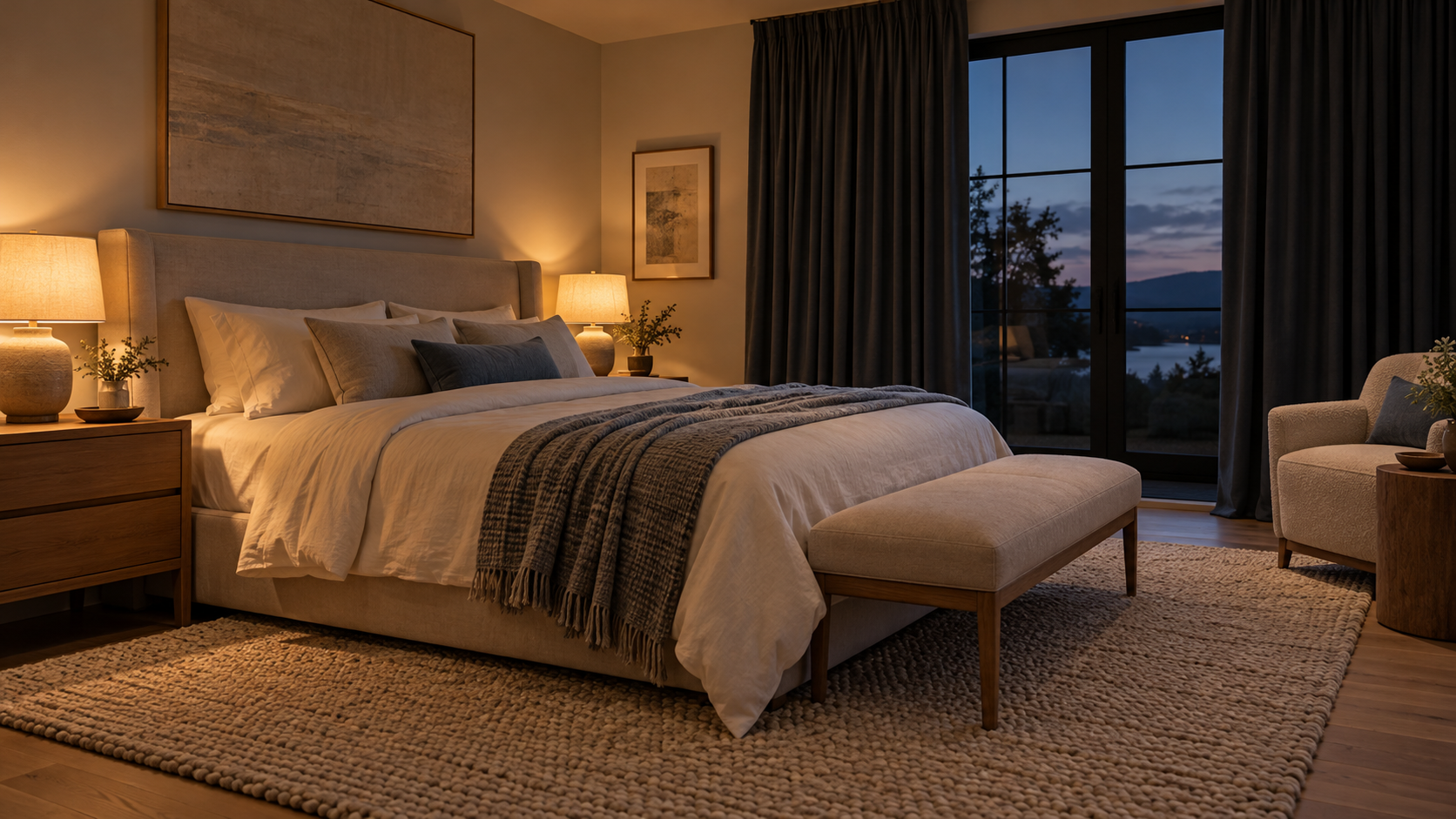
A well-designed bedroom must serve as more than just a place to rest; it should be a functional sanctuary that supports slow mornings and deep, uninterrupted sleep. The most effective designs are those driven by routine, not solely by aesthetics. This guide moves beyond fleeting trends to offer specific, actionable strategies for curating a space where every element contributes to a sense of ease and calm. We focus on proportion, materiality, and light—the quiet pillars of restorative interior design.
Prioritizing Proportion and Flow in Sleep Spaces
The foundational decision in any bedroom is establishing appropriate scale and movement. Before selecting decorative pieces, define the room’s primary function—sleep and transition. Ensure that circulation paths are generous; ideally, maintain at least 75-90 cm (30–36 inches) of clear space around key furniture like bedside tables or dressers. Cramming large pieces into a small area creates visual tension and physical friction, making the room feel busy even when it is tidy. A simple layout that allows for unhindered access to drawers and surfaces gives the eye a necessary place to rest.
When selecting the bed frame, consider its mass relative to the ceiling height and wall space. An overly heavy or tall headboard can dominate a modest room, while an excessively low profile may feel unstable. For rooms under 12 square meters, opting for streamlined, lower-profile pieces is often advisable. A common mistake is trying to maximize storage by using bulky nightstands; instead, consider floating shelves or drawer units that maintain visual lightness, allowing the floor space to contribute to a feeling of openness.
The trade-off between maximizing function and maintaining flow requires careful negotiation. If you need significant bedside storage, opt for narrow vertical units rather than wide horizontal ones. A practical measure is to ensure there are at least 50 cm (20 inches) between the edge of the mattress and any adjacent furniture or wall to prevent feeling confined during waking hours. Always test your layout by walking through it; if you feel restricted while moving from the bed to the window, the proportion needs adjustment.

Selecting Restrained and Tactile Materials
Materiality in a bedroom should be chosen for its texture and longevity, not its visual noise. The goal is repetition of one or two calming finishes—such as matte ceramic, woven linen, or softly brushed metal—rather than collecting many disparate textures. For wood furnishings, choosing pieces with a natural grain rather than heavy staining introduces depth while maintaining an organic feel. When cleaning oiled walnut furniture, for example, always start by testing a tiny area (e.g., 1 cm x 1 cm) to ensure the oil is compatible; use only specific wooden furniture cleaners designed for that finish, avoiding vinegar or ammonia mixtures.
Layering texture should be subtle and purposeful. Think of how textiles interact with light: heavy, matte linens absorb sound and soften harsh edges, while a woven jute rug adds grounding warmth without demanding attention. If your room has hard flooring (wood or stone), introducing an area rug that is large enough to sit under the front two-thirds of the bed helps define the sleeping zone and introduces necessary softness. The trade-off here is maintenance; highly textured materials require more frequent vacuuming or spot cleaning than smooth, polished surfaces.
Metal accents should be used minimally and consistently. Instead of mixing chrome, brass, and matte black, commit to one finish—perhaps a muted bronze for lamp bases or drawer pulls. This repetition creates visual rhythm and coherence. If you have stone elements (e.g., a marble bedside top), ensure the surrounding materials complement its cool tone; pairing it with warm timber introduces contrast while keeping the palette grounded. Avoid highly reflective, polished metals, as these can create distracting glare in a space meant for rest.
Designing Light and Atmosphere for Sleep Cycles
Lighting is perhaps the most critical element for creating a restorative bedroom. Abandon single overhead fixtures; instead, implement layered lighting that allows you to adjust intensity based on activity. Use low-level task lighting—such as adjustable wall sconces or bedside lamps with warm (2700K) bulbs—to facilitate reading and winding down. The primary light source should be dimmable, allowing the transition from bright morning wakefulness to deep evening relaxation without jarring shifts in illumination.
Consider how natural light enters the space and manage it strategically. If direct sunlight is harsh during waking hours, use sheer linen or cotton curtains that diffuse the light rather than blocking it entirely. This allows ambient brightness while softening shadows. For bedrooms facing intense sun, motorized blinds offer a practical solution for maintaining temperature stability and privacy without manual effort. The common mistake here is relying solely on blackout shades; diffusing light creates a more gentle, less oppressive atmosphere.
Beyond fixtures, incorporate small elements that influence the room's perceived calm. A single, structural plant (such as a snake plant or ZZ plant) introduces natural geometry and subtle life without requiring excessive care. If you opt for fresh flowers, choose low-maintenance varieties. When selecting light sources, remember that warmer tones are inherently more restful than cool, blue-toned lights. The best atmospheric choice is one where the lighting supports your routine—a gentle glow for reading, a soft dimness for sleep.
Practical Planning Notes
Aim for 24–30 inches of clearance beside the bed where possible, and keep the sleep zone visually quieter than storage.
Material Perspective
Blackout-lined linen softens a room; woven shades filter daylight while preserving a lighter feel.
Before You Commit
Test light control, bedside reach, night-time circulation, and charging before committing to the layout.
For related, room-specific ideas, continue with the guides in this category or return to the Furnlyra home page.