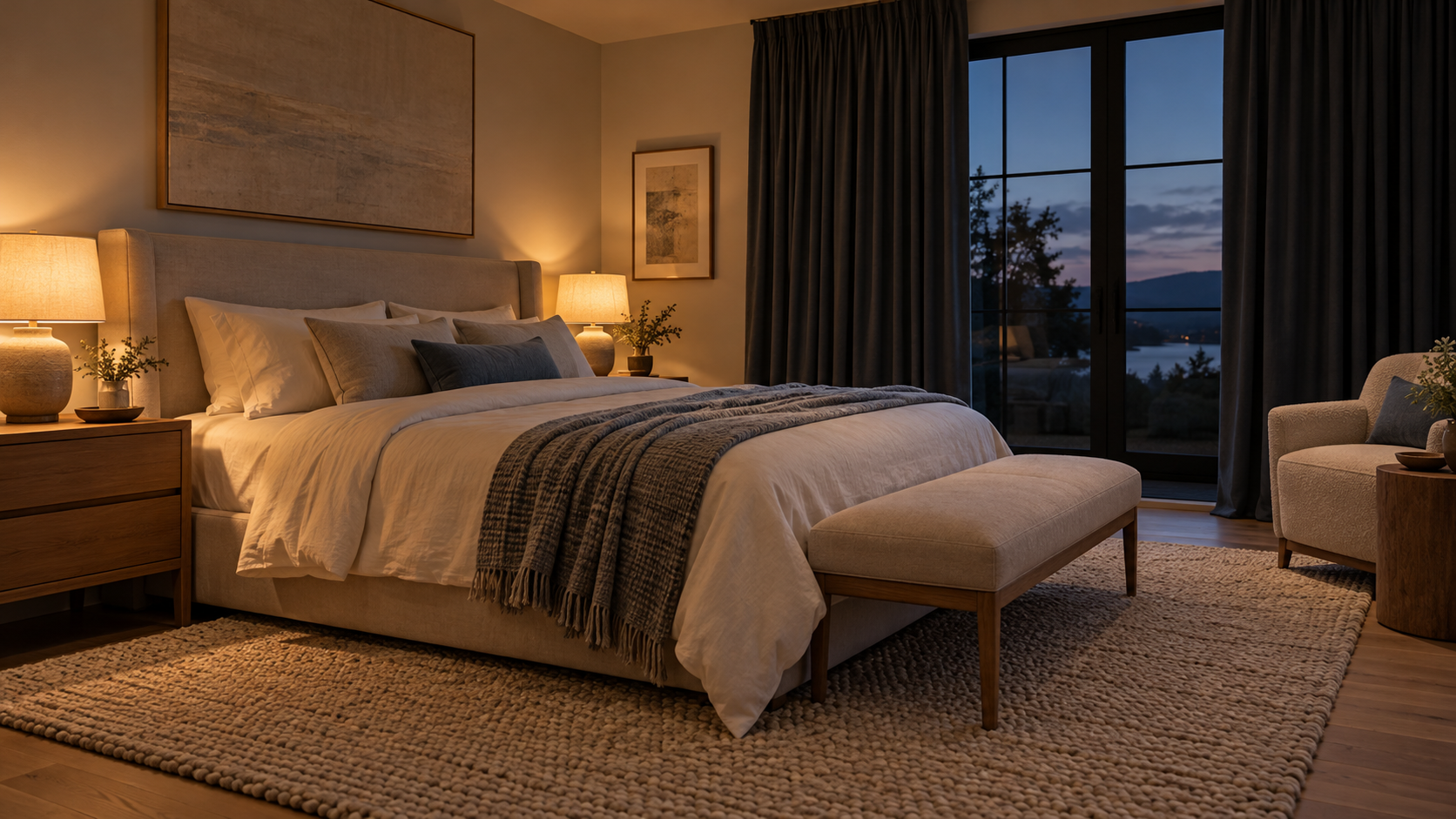
A bedroom should not merely be a place where we sleep; it must function as a sanctuary—a deliberate retreat from the constant clamor of modern life. In an age defined by blue light and relentless stimulation, the quality of our rest is increasingly dependent on the environment we curate. The architecture of our sleep space, encompassing everything from the shade of the wall paint to the placement of a bedside table, plays a profound psychological role in determining how deeply, and how peacefully, we recover. Designing a truly restorative bedroom is not about following fleeting trends; it is an act of thoughtful intention. It requires aligning the physical elements of the room—colour, light, texture, and layout—with the biological needs of the body, allowing us to signal safety and calm before drifting off. This process transforms the sleeping space from a simple box into a tailored haven, where every detail encourages tranquility.
Give the eye a quieter palette
The colours we choose for our walls and textiles have an immediate and powerful impact on our nervous system. For maximum repose, the goal is to give the eye a quieter palette—a gentle visual experience that avoids high contrast or jarring saturation. Opting for muted tones such as soft sage greens, dusty blues, warm greys, or creamy off-whites allows the room to feel expansive yet enveloping. These subtle hues mimic the natural, low-saturation landscapes of dusk and dawn, gently easing the mind into a state of calm rather than stimulating it with vibrant energy.
Avoid overly bright or aggressively saturated colours, which are often linked to high alertness and activity. Instead, focus on shades that have been softened by grey or beige undertones; these nuanced neutrals provide depth without demanding attention. Consider using deep, grounding tones—like navy or charcoal—on an accent wall behind the bed. This creates a psychological anchor, lending gravitas and stability to the room while keeping the overall atmosphere peaceful.
Furthermore, the palette should extend beyond the walls into the textiles. Linen bedding in natural flaxen whites or soft oatmeals, paired with throw pillows in complementary muted tones, ensures that every surface contributes to the overarching theme of visual serenity. The interplay between subtle colour shifts and varied textures—smooth cotton next to nubby wool—adds richness without introducing visual noise.

Layer light for the end of the day
The way we interact with light is perhaps the most critical element in regulating our circadian rhythm, the body's natural internal clock. A bedroom that relies solely on harsh overhead lighting fails this essential test; it provides illumination but not atmosphere. Instead, successful sleep design demands layering—a constellation of soft, localized sources that can be adjusted throughout the evening.
Begin by eliminating bright, cool-toned LED bulbs (those with a high Kelvin rating) from all primary fixtures. As evening approaches, your lighting should transition towards warmer hues, ideally in the 2700K to 3000K range. These amber and soft yellow tones closely resemble natural candlelight or sunset glow, which signals to the brain that it is time to wind down. This shift in colour temperature alone can profoundly influence melatonin production.
Layered lighting involves multiple sources: a soft floor lamp positioned near a reading chair, delicate wall sconces flanking the bed, and perhaps a low-level bedside table light. These individual points of warmth allow you to control the illumination precisely without flooding the room with glare. When preparing for sleep, dimmer switches are indispensable; they enable a gradual dimming that mimics the natural decline of daylight, promoting a smooth transition into rest.

Keep the final details calm and useful
The practical elements of a bedroom—the layout, storage solutions, and small habits—determine whether the room feels like an escape or just another cluttered space. A truly restful environment is one that requires minimal cognitive effort; it must be visually uncluttered and functionally supportive.
Layout should prioritize flow and psychological distance from external stressors. The bed, as the focal point of rest, should ideally not face a high-traffic area (like an open doorway or television). Ensure there is enough breathing room around the furniture to prevent the space from feeling cramped or oppressive. Placing large, grounding pieces—such as a substantial wooden dresser or a low bookshelf—along solid walls adds structural calm.
Finally, integrating gentle everyday rituals transforms the bedroom into a dedicated sleep zone. This means treating the bedside area not just as storage but as a station for calming habits. Keep essential items within easy reach: a weighted blanket, a book, a glass of water, or an aromatherapy diffuser with lavender oil. The ritual of tidying up before bed—making the bed and putting away clothes—is a small yet powerful act that signals to your brain that the day's tasks are complete and the sanctuary is ready for rest.

Practical Planning Notes
Aim for 24–30 inches of clearance beside the bed where possible, and keep the sleep zone visually quieter than storage.
Material Perspective
Blackout-lined linen softens a room; woven shades filter daylight while preserving a lighter feel.
Before You Commit
Test light control, bedside reach, night-time circulation, and charging before committing to the layout.
For related, room-specific ideas, continue with the guides in this category or return to the Furnlyra home page.