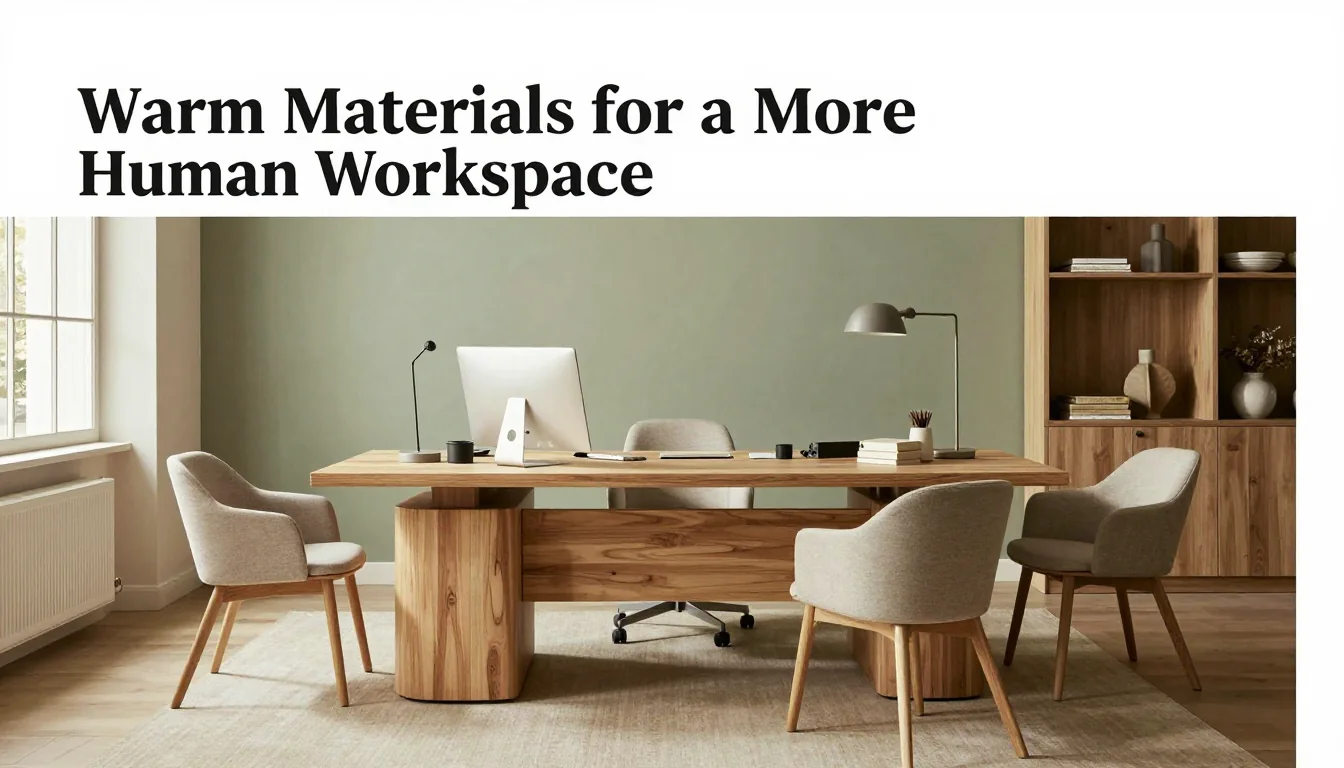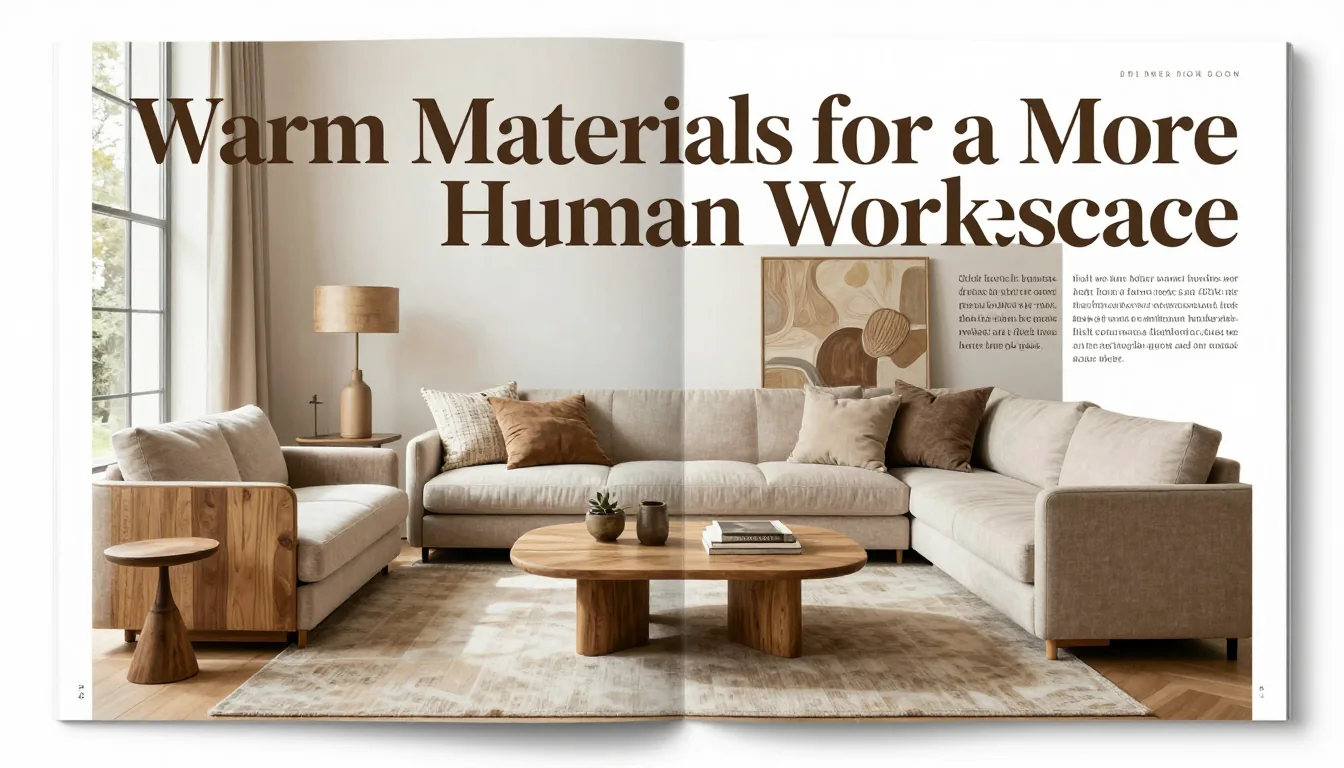
A functional office should do more than just hold equipment; it must support sustained concentration while feeling inherently welcoming. The goal is not to mimic domestic warmth but to create an environment that reduces cognitive friction—a space that encourages routine and ease rather than demanding performance. By prioritizing materials with texture and inherent character, we can move beyond sterile modernity into a workspace that feels grounded and human-scaled. This guide provides specific material choices and practical decisions for integrating natural elements effectively.
Selecting Grounding Surfaces: Wood and Stone
The most critical decision in designing a warm office is selecting the primary surface materials—desktops, shelving, and side tables. While laminate offers cost efficiency, solid wood or high-quality engineered timber provides essential tactile warmth that improves perceived comfort. For areas requiring heavy use, such as the main desk surface, consider woods with durable finishes like oiled oak (chosen for its resistance to minor scuffs) or walnut, which offers a deep, stable tone. If your office is prone to spills or requires high-traffic durability, pairing a wood frame with a matte ceramic or honed concrete inset panel provides a practical barrier while retaining visual warmth.
When choosing timber species and finishes, the grain pattern dictates the mood. Straight, tight grains (like maple) lend themselves to minimalist, bright environments, whereas heavily figured woods (such as reclaimed elm or dark acacia) introduce immediate character and depth. A common mistake is selecting a wood that is too visually busy; ensure the texture supports the function, not overwhelms it. For instance, a highly variegated grain on a desk used for detailed work can be distracting. Aim for a finish that sits matte to satin (around 20-30 sheen) rather than high gloss, as excessive reflection pulls focus and feels cold.
Trade-offs are inevitable here. Solid hardwood desks, while beautiful, require more specialized care; they are susceptible to temperature fluctuations and scratching. If opting for wood, always patch test the chosen oil or wax finish on a discrete area first—this prevents discoloration or hardening that could compromise the material. For maintaining an oiled surface, use only specific furniture conditioning oils (e.g., tung oil) applied lightly every 6–12 months, ensuring you follow the manufacturer’s instructions precisely to avoid buildup.

Integrating Texture for Focus and Comfort
Texture acts as a visual buffer, softening the hard lines of technology and structure. This is where textiles and soft finishes come into play, but they must be introduced strategically to avoid cluttering the workspace. Instead of draping fabrics everywhere, focus on high-impact, low-volume items: an area rug under a standing desk (ideally 200cm x 300cm), or a quality woven throw draped over a reading chair. Choose natural fibers—wool, chunky linen blends, or jute—which absorb sound and introduce visual rhythm without introducing distracting patterns.
The choice of metal accents is equally important. Avoid highly polished chrome or brass; instead, opt for brushed finishes—matte black steel, soft bronze, or brushed champagne gold. These muted metals catch light gently, adding definition without the harshness associated with high reflectivity. For example, a desk lamp base in matte blackened steel provides necessary visual weight and contrast against warm wood while keeping the overall aesthetic grounded and sophisticated.
A crucial design decision involves seating. While ergonomic chairs are mandatory for function, they do not need to be purely plastic or mesh. Look for task chairs upholstered in natural fabrics like heavy woven wool or durable tweed in deep, muted tones (forest green, charcoal grey). This introduces a substantial layer of tactile warmth. The trade-off is often between maximum breathability and superior comfort; choosing a tightly woven, breathable fabric can mitigate this issue while dramatically increasing the room's perceived coziness.
Workflow Friction: Light, Maintenance, and Proportion
Warmth is also achieved through light quality. Hard overhead fluorescent lighting instantly negates any effort made with warm materials. Instead, layer your lighting design. Use directional task lamps (with a 2700K to 3000K color temperature) for focused work and softer ambient floor or table lamps positioned in corners to create pools of warmth. The light should feel intentional—it should illuminate the task without creating glare on screens or surfaces.
Proportion is often overlooked when adding 'warm' elements. A massive, dark wood credenza can instantly overwhelm a small office; conversely, tiny accent pieces lose their grounding effect. Ensure that your furniture scale relates correctly to the room size and occupant height. For example, if you have an 80cm high desk surface, ensure any accompanying storage unit or shelving does not create an abrupt visual jump in height without transitional elements.
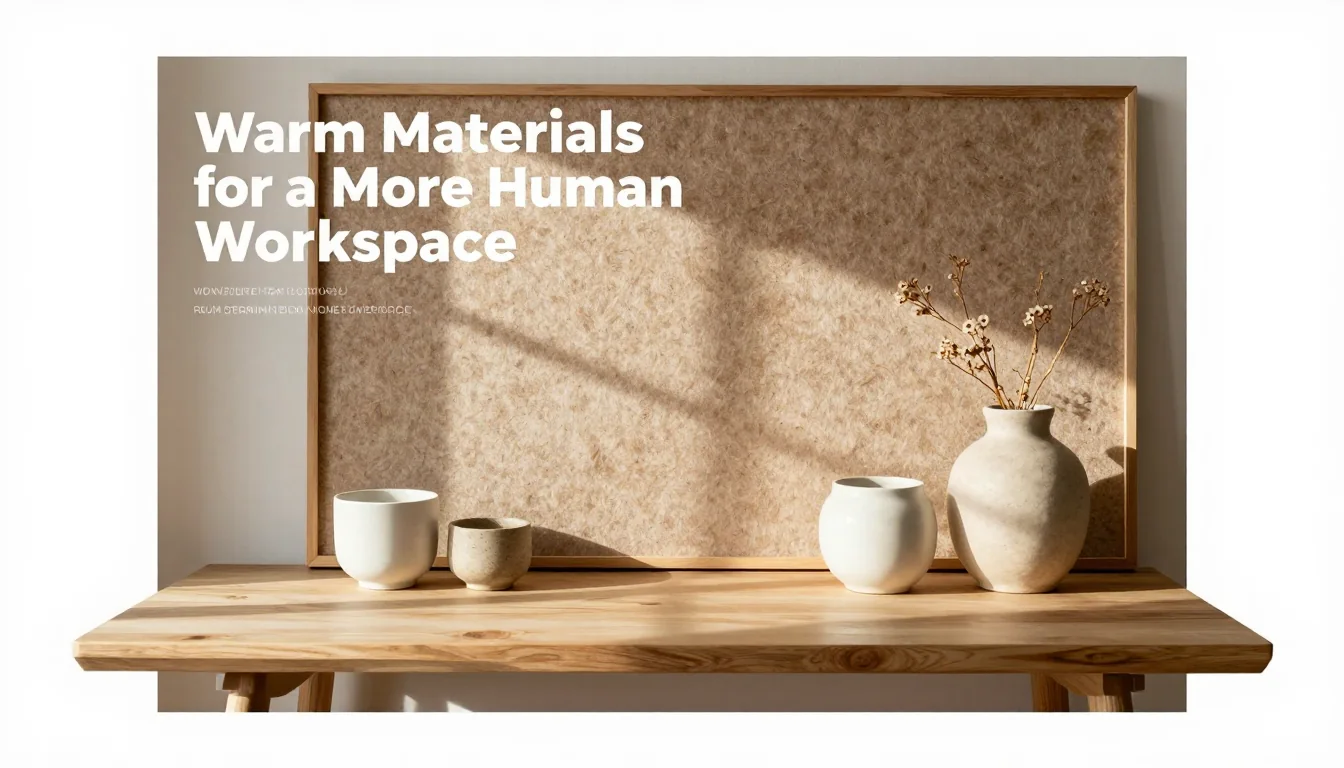
Finally, consider maintenance as a design factor. Highly porous materials (like raw stone slabs or unsealed wood) require constant vigilance and can quickly become sources of stress if they stain easily. If you are prone to having beverages nearby, select surfaces with a slight sealing treatment or choose durable composite materials that mimic the warmth of natural finishes. The best 'human' workspace is one where daily habits—like clearing crumbs or wiping away dust—are manageable, ensuring the aesthetic remains relaxed and unburdened by constant upkeep.