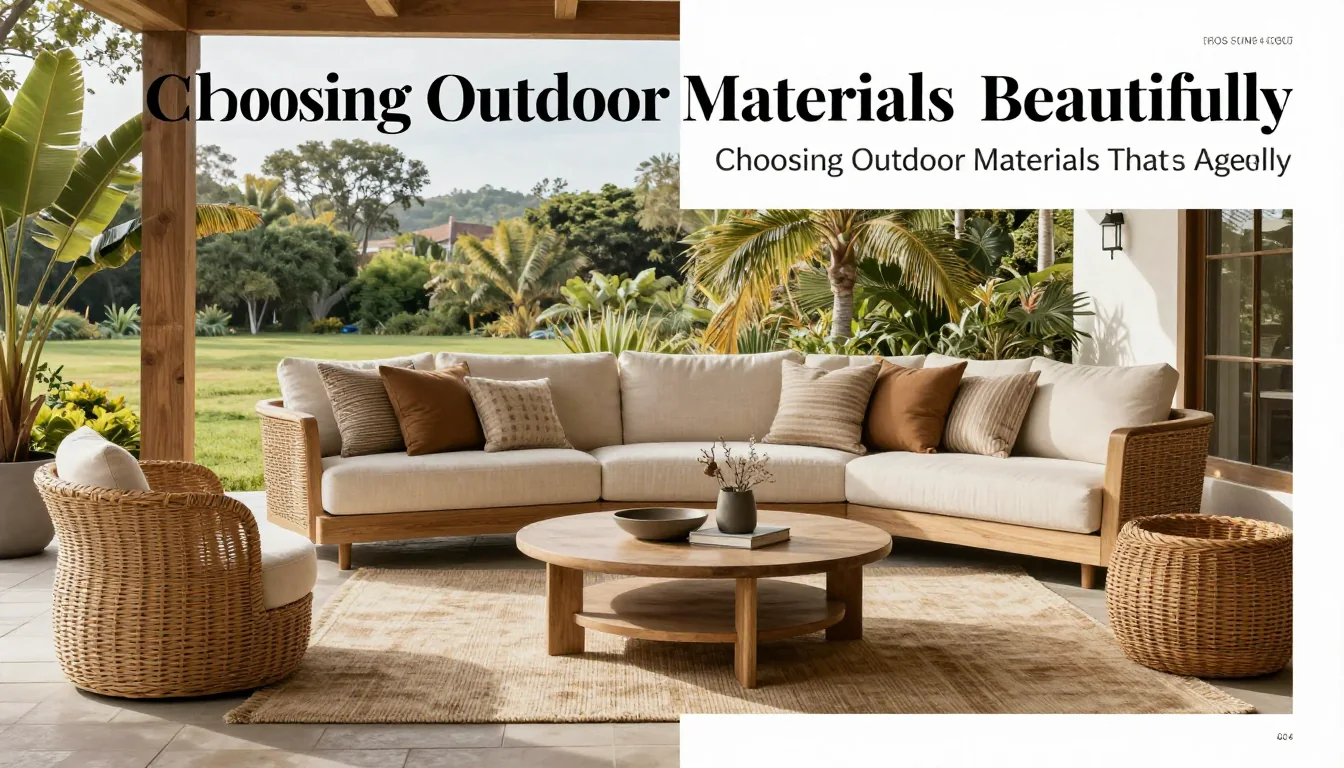
The true measure of a successful exterior space is not how perfect it looks on day one, but how beautifully it evolves. When designing for the outdoors, we move beyond transient aesthetics; we select materials that have a narrative built into their composition—materials designed to accept the elements, absorb light, and deepen in character with every season. This guide provides practical decisions regarding hardscaping, timber, and metals, focusing on longevity, functionality, and how each material responds uniquely to sun, rain, and environmental wear.
Understanding Hardscape Resilience: Stone, Concrete, and Metal
When selecting foundational hardscaping—paving, retaining walls, or architectural elements—the key decision is matching the material's porosity to your climate. Highly porous natural stones, such as certain Sandstones or Travertine, are inherently beautiful but require meticulous sealing (using a penetrating silane or acrylic sealer) if they are in areas prone to heavy rainfall or frost heave. A trade-off exists between highly durable materials like polished granite and more characterful options; while granite resists almost all staining, unpolished slate will develop subtle mineral efflorescence over time, which is part of its aged appeal. Ensure any concrete mix specified for outdoor use has an appropriate slump resistance and includes air entrainment agents to prevent cracking in freeze-thaw cycles.
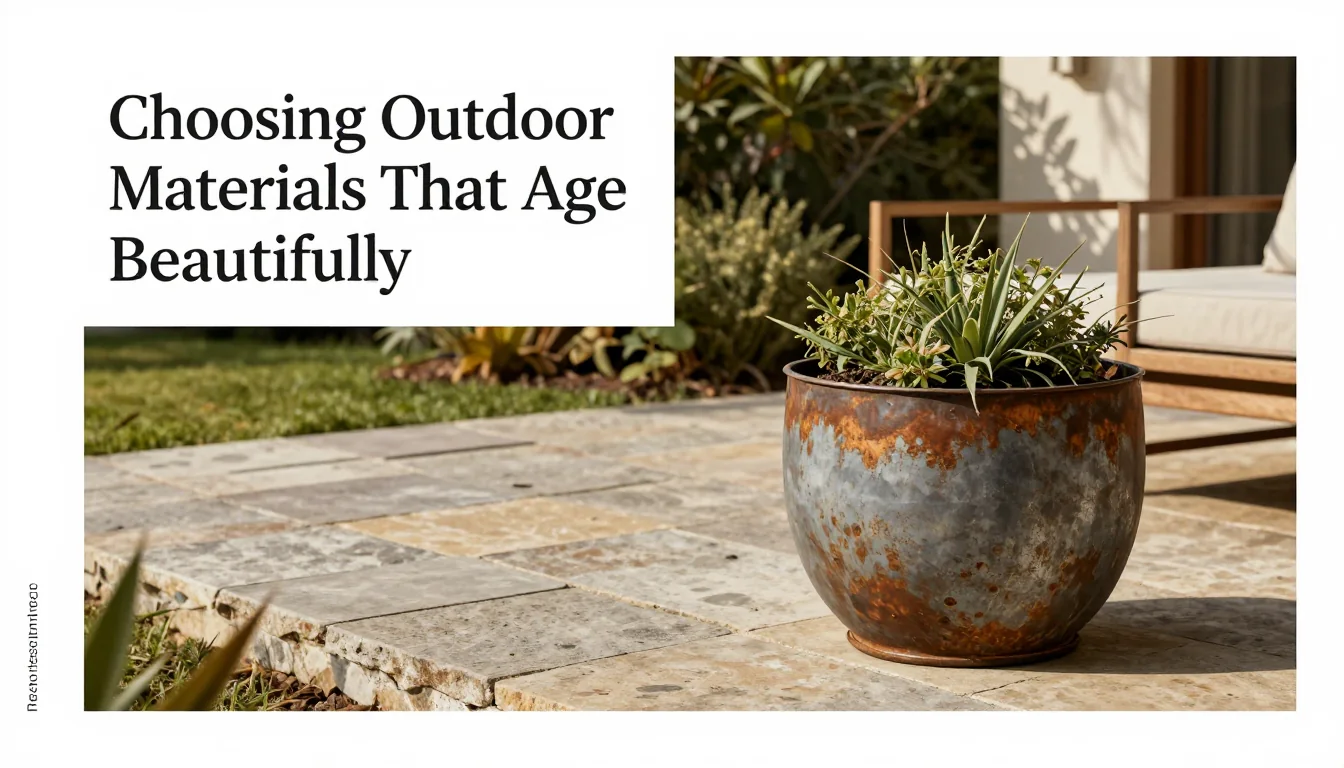
Metal choices should be dictated by the desired aging effect. Corten steel is designed to form a stable rust patina (a protective layer), making it excellent for structural accents, but this process must be allowed to complete without interference; attempting to aggressively clean or seal fresh Corten will disrupt its intended weathering cycle. For areas requiring lighter maintenance, powder-coated aluminum offers consistent color and resistance to corrosion, though it lacks the deep textural history of oxidized copper or weathered steel. If choosing untreated brass for detailing, understand that green verdigris formation is inevitable; this patina can be stabilized chemically if desired, but embracing the natural shift is often more authentic.
Consider the scale and jointing when laying stone. For large-format pavers (e.g., 60x60 cm), minimal grout lines are essential to reduce the points of water ingress that lead to freeze damage or weed growth. In high-traffic areas, prioritize materials with inherent slip resistance; rough-cut flagstone is superior to smooth tiles in damp conditions. A common mistake is relying solely on visual appeal without calculating thermal movement—materials expand and contract differently under intense sun, necessitating appropriate expansion gaps (often 1–2 cm) between fixed elements.
Timber Selection: Managing Weathering and Patina
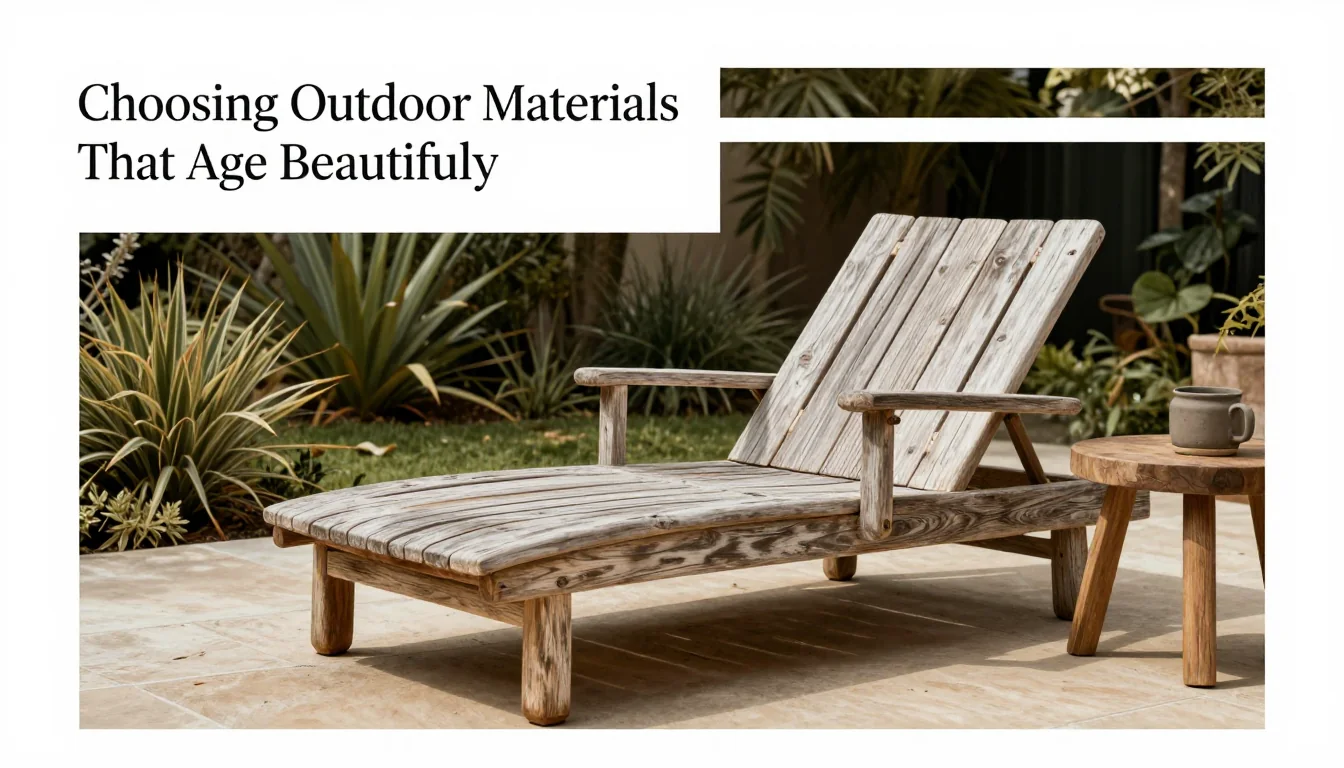
The choice of exterior timber is fundamentally a balance between stability and appearance. Hardwoods like Ipe, Teak, or Black Locust are highly dense and naturally resistant to rot and insect damage due to their high oil content; they will gray gracefully rather than splinter violently, achieving a deep, silvery patina. Conversely, softer woods like Cedar offer an initial aromatic appeal but require more diligent maintenance to prevent rapid moisture absorption, leading to warping if left untreated in extreme conditions. Always calculate the required timber thickness based on load-bearing needs, not just aesthetic preference; for outdoor decking, minimum effective dimensions are typically 45mm x 100mm.
Maintenance protocols must be finish-specific. If using an oil-based stain (recommended for achieving a warm, deep tone), reapplication is necessary every 12 to 18 months to maintain the protective barrier and prevent UV degradation. Patch testing is mandatory before applying any treatment; test in a discrete area (approximately 30 cm x 30 cm) and observe how the finish reacts to rain exposure over several weeks. If opting for an untreated, natural graying effect, avoid using sealants or stains entirely, accepting that surface erosion will gradually soften edges and deepen color.
A crucial decision involves joinery techniques. Exposed joints are points of failure; they trap moisture and accelerate decay. Where possible, utilize hidden fasteners or mortise-and-tenon construction rather than relying on visible screws, which can rust and stain the surrounding wood. When specifying composite decking as an alternative to natural timber, be aware that while maintenance is minimal, their heat retention properties are significantly higher; this must be factored into proximity to seating areas or children’s play zones.
Designing for Durability: Site Specificity and Maintenance Cycles
Before purchasing any material, conduct a thorough site assessment of microclimates. Areas facing prevailing winds or constant afternoon sun will degrade materials faster than shaded, protected zones. In coastal environments, salt spray is the most aggressive corrosive agent; therefore, avoid untreated iron fittings and opt for marine-grade stainless steel (AISI 316) or powder-coated aluminum for all hardware. If your site experiences significant humidity fluctuation, ensure that any stone or wood elements are installed with adequate ventilation space beneath them to prevent moisture pooling, which is the primary catalyst for biological growth.
Practical longevity requires establishing a realistic maintenance budget and schedule. Highly natural materials—such as raw concrete or unfinished timber—require less chemical intervention but demand more physical attention (cleaning debris, checking joints). Materials like treated lumber require scheduled re-coating to maintain their integrity. A common pitfall is viewing material selection only through the lens of initial cost; often, the cheapest option requires exponentially higher maintenance costs over a ten-year period compared to a durable, mid-range investment.
When designing for seasonal change, consider how textiles and movable elements interact with permanent structures. Choose outdoor cushions and throws made from solution-dyed acrylics (like Sunbrella), which are engineered to resist fading and mildew without requiring constant washing. Ensure that all furniture pieces have discreet drainage points; standing water is the quickest route to structural failure in any exterior piece, regardless of its material composition. By prioritizing resilience over immediate perfection, your outdoor space will become a continuously evolving, functional extension of the home.
Practical Planning Notes
Create one route from door to seating, leave space for chair pull-back, and plan shade before accessories.
Material Perspective
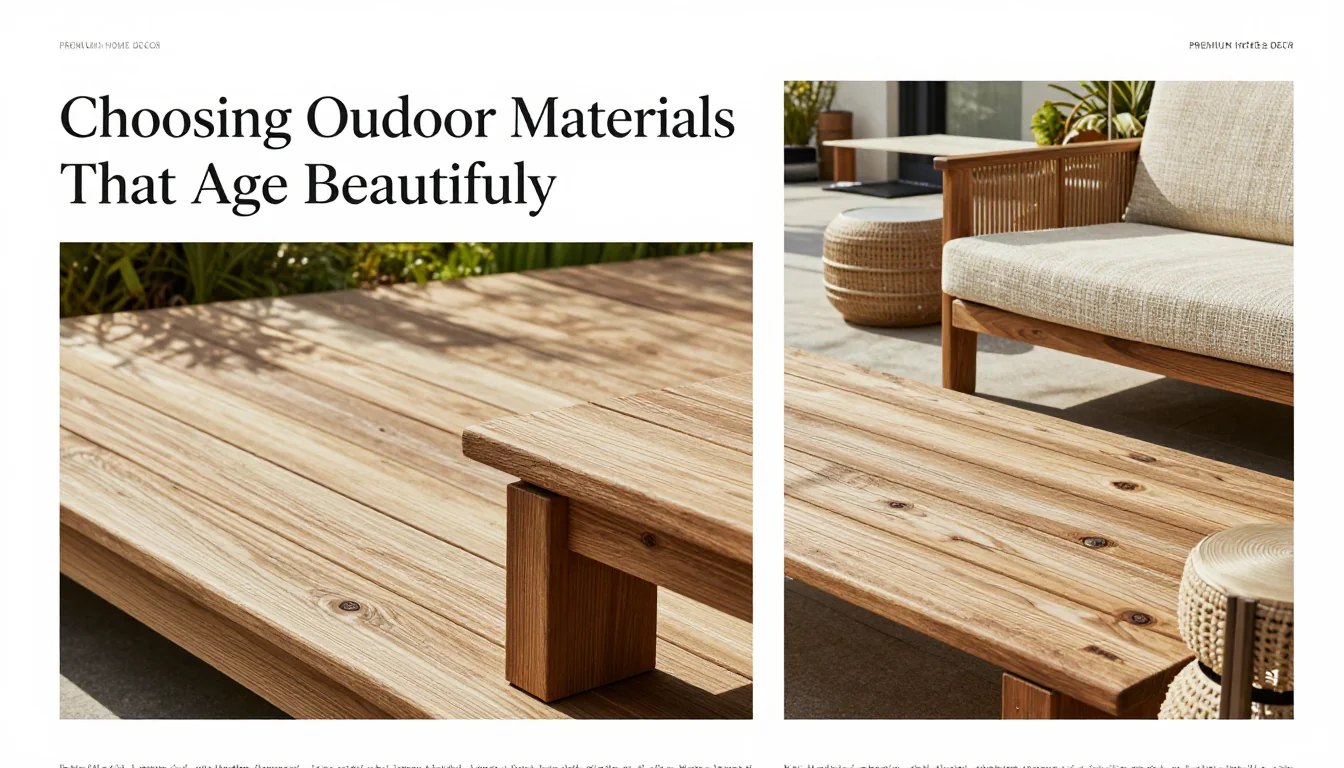
Powder-coated aluminum is light and low-maintenance; teak weathers gracefully; untreated steel needs weather protection.
Before You Commit
Confirm drainage, wind exposure, winter storage, and washable textiles for the specific outdoor zone.
For related, room-specific ideas, continue with the guides in this category or return to the Furnlyra home page.