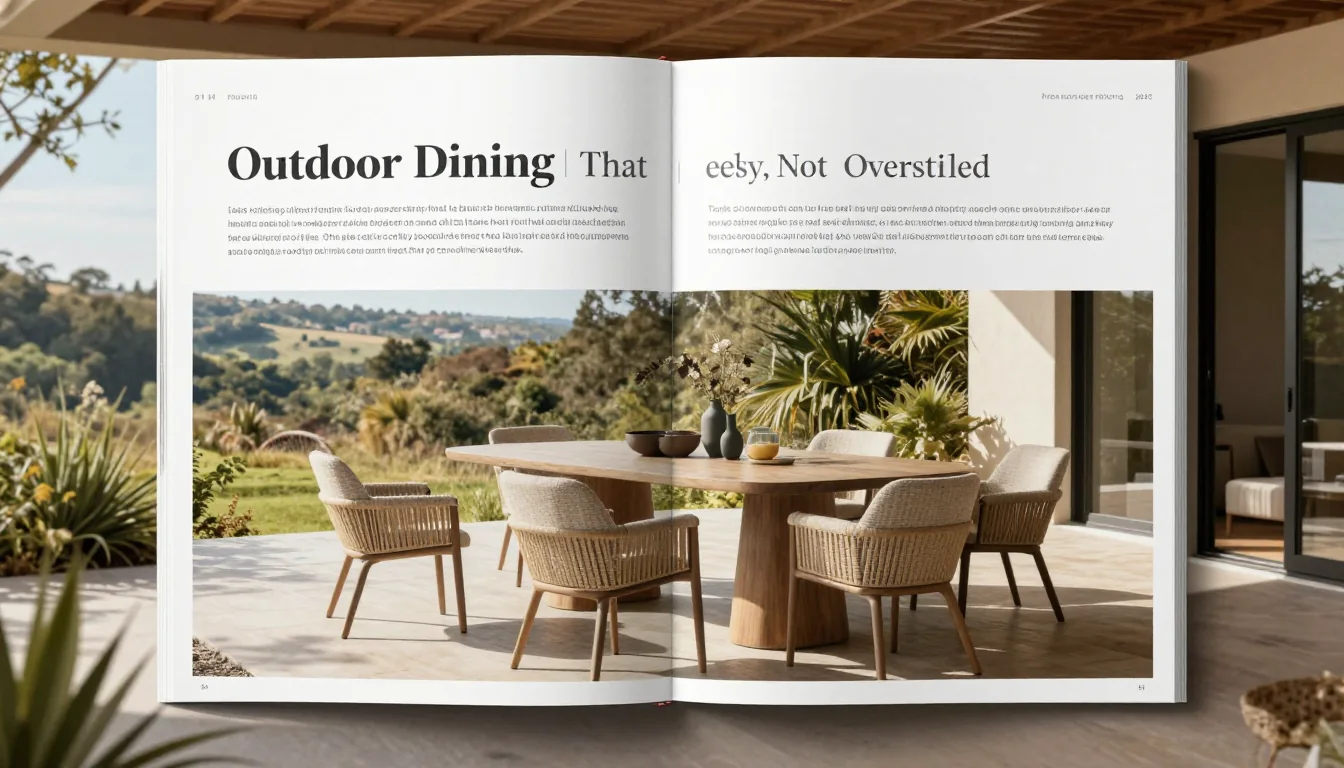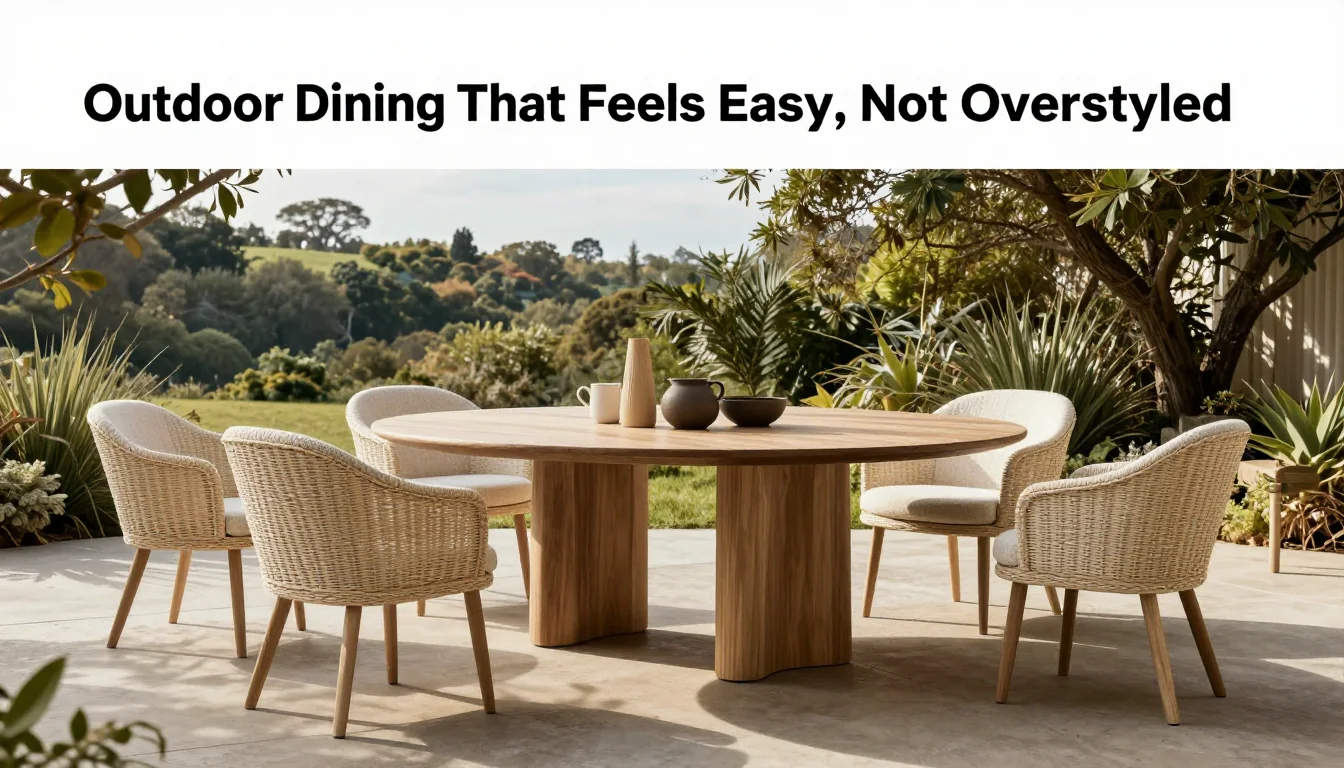
Achieving an outdoor space that feels genuinely easy—not merely staged—requires shifting focus from aesthetic perfection to practical functionality. The goal is not a visual spectacle for a single photograph, but a robust setting that supports the rhythm of daily life. Before selecting any item, observe how you actually use the area: where do you pause? What furniture causes friction when pulled out or shifted? By designing around these real-life habits and prioritizing utility over excess, even modest outdoor areas can achieve a settled, inviting character.
Optimizing Scale and Circulation
The foundational decision in any casual outdoor dining area is proportion. The furniture must be scaled to the specific footprint of the patio or deck, not merely sized for a large gathering. A common mistake is selecting an overly grand table that dominates the space; this immediately creates visual tension and limits usability. For a typical four-to-six person setting, ensure the main dining surface does not exceed 180cm in length if it resides within a standard patio area of less than 4m x 3m. This ensures there is adequate breathing room around the perimeter.
Circulation paths are paramount to achieving an 'easy' feel. Designate clear pathways, ideally maintaining a minimum clearance of 90cm (about 3 feet) between the edge of any seating and adjacent walls, planters, or railings. This allows people to pull chairs out, move around the table easily, and access surrounding features without needing to negotiate tight corners. If your space is narrow, consider nesting tables that can be stored flush against a wall when not in use, freeing up critical movement space.
Grounding the setting further requires thoughtful integration of permanent or semi-permanent surfaces. Instead of relying solely on movable furniture, anchor the dining zone with a durable side table or low credenza—a piece made from stone or solid timber that serves as both functional surface and visual weight. This provides a stable location for drinks or serving dishes while preventing the entire setup from looking like it is floating in the space.
Selecting Durable, Restrained Textures
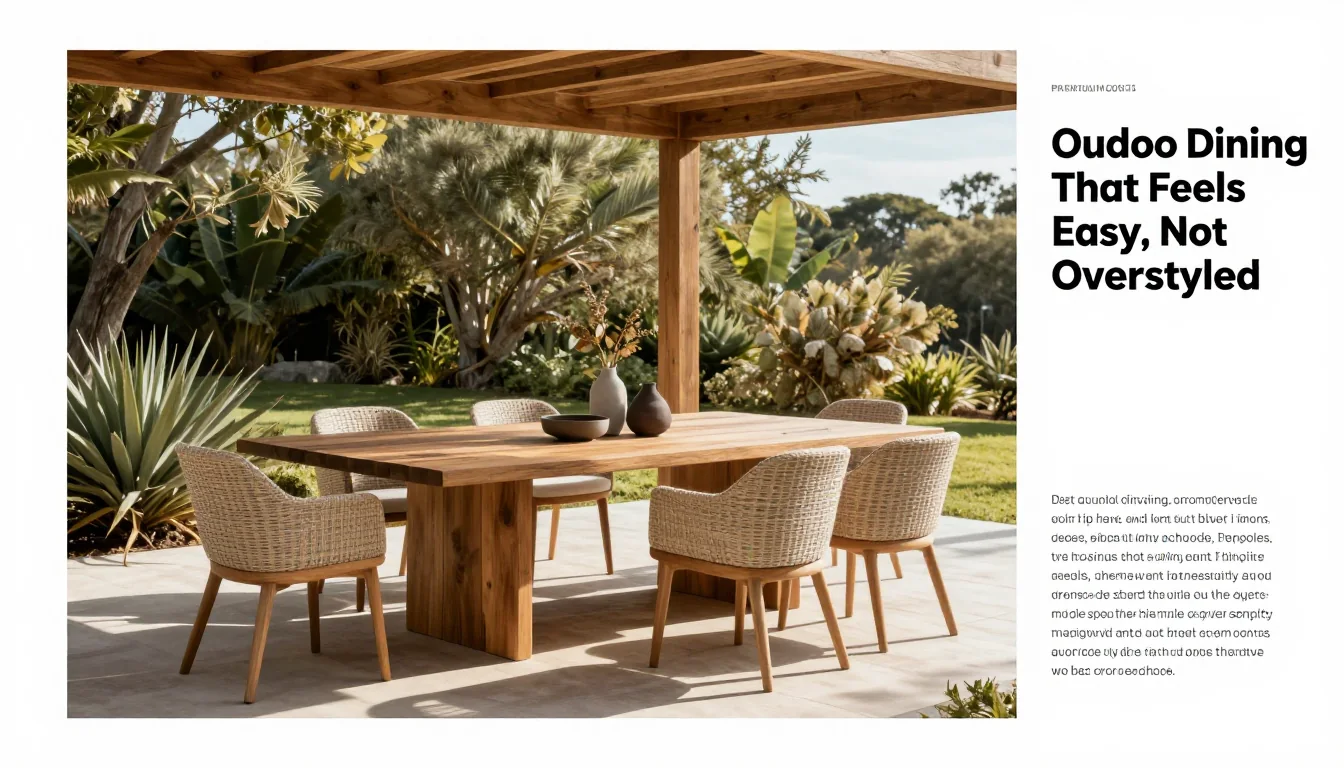
Material selection must balance visual appeal with extreme durability. For primary surfaces—tables and chairs—consider high-quality powder-coated aluminum or weather-treated hardwoods like Ipe or Teak. Aluminum offers low maintenance and resists rust, while treated woods provide warmth but require periodic oiling (check manufacturer recommendations for specific wood finishes). A key trade-off is weight versus portability; heavier pieces offer stability but are harder to rearrange.
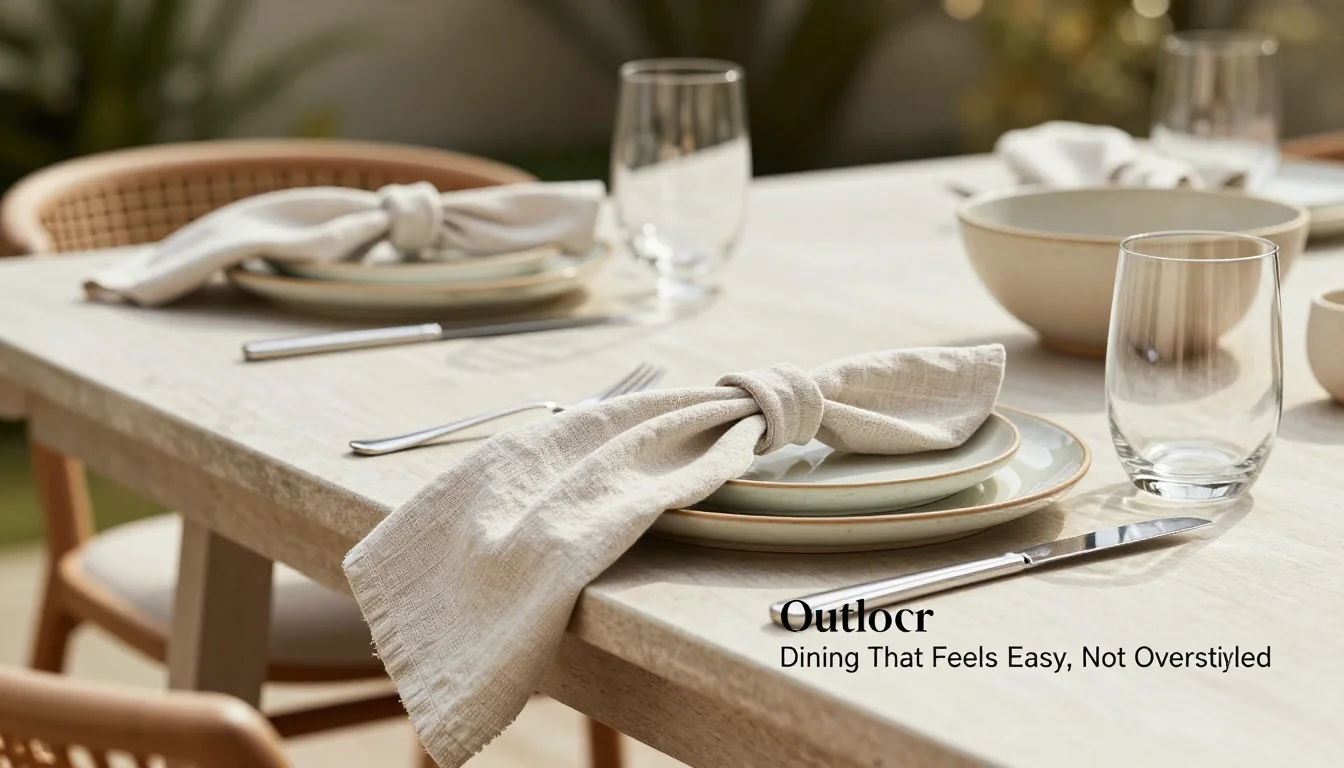
To introduce visual interest without introducing clutter, repeat one or two core textures. If your primary table is smooth teak, complement it with woven fibre seating that features a matte finish, rather than mixing in highly polished metals and varied plastics. Use natural fibers—such as heavy-weight linen cushions, jute rugs (ensure they are rated for outdoor use), or stone coasters—in muted tones. This repetition creates visual rhythm and makes the setting feel intentional and settled.
The color palette should be restrained and grounded. Opt for deep neutrals (charcoal, slate grey, moss green) combined with natural wood tones. Avoid high-saturation colors that can look jarring when exposed to sunlight or rain. If you introduce a pop of color via cushions, keep it singular and use it sparingly—perhaps on just one chair—to provide a focal point without overwhelming the casual atmosphere.
Maintenance and Adaptability for Longevity
Planning for changing weather is non-negotiable. Ensure all furniture has adequate drainage points, and any cushions or textiles are specifically rated for UV resistance and mildew prevention. For wooden elements, choose finishes designed to withstand cycles of expansion and contraction from temperature shifts. Avoid high-gloss lacquers on outdoor wood; a matte, penetrating oil finish allows the timber to breathe and resist cracking better than sealed surfaces.
Maintenance protocols should be simple enough that they do not become a burden. If you opt for treated hardwood, establish a routine: re-oil every six months during dry periods. Before applying any cleaner or treatment, always perform a patch test on an inconspicuous area of the wood or fabric to ensure compatibility with the specific finish. For aluminum and powder-coated items, simple washing with mild soap and water is usually sufficient; avoid abrasive scrubbers.
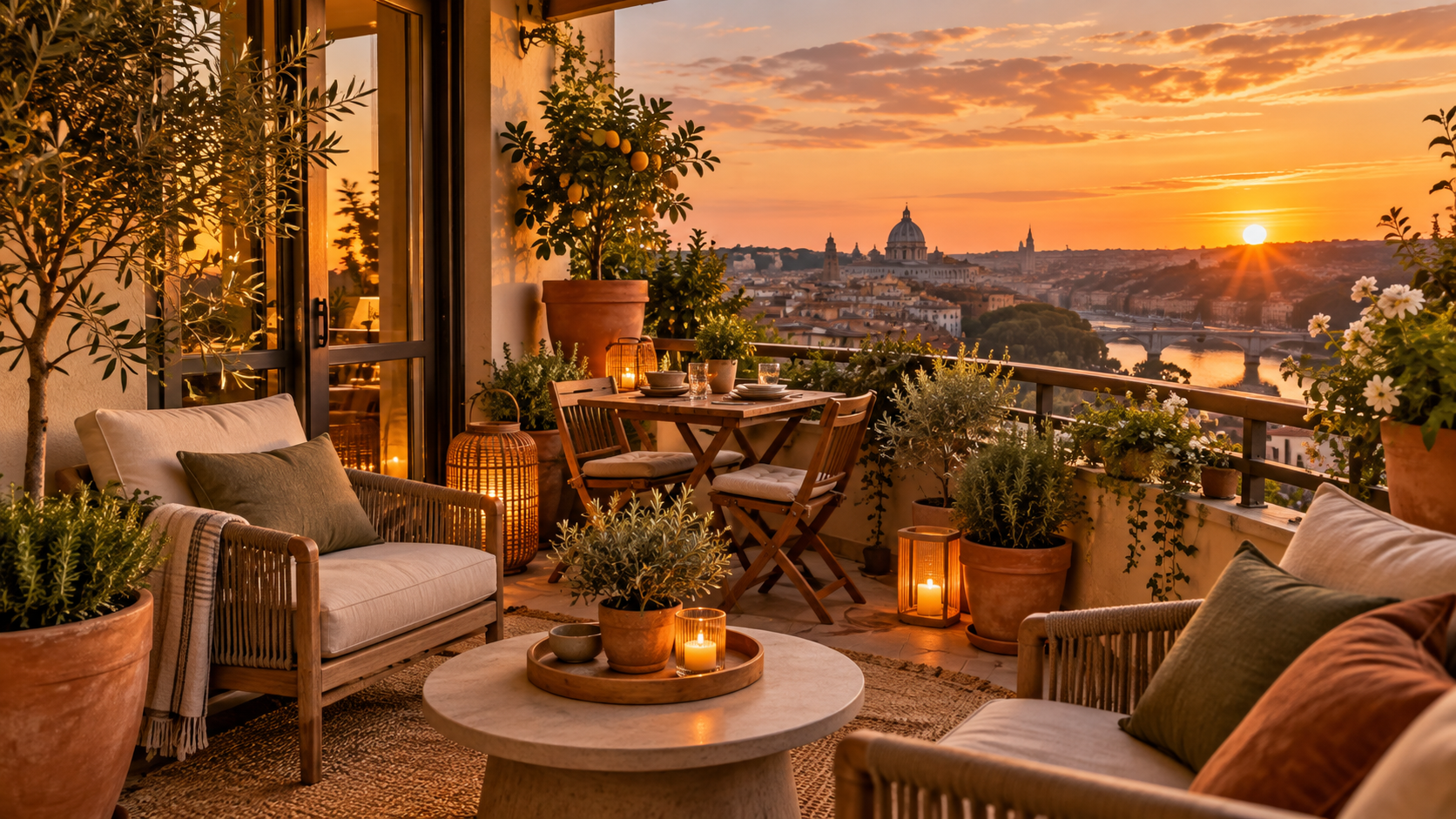
Softening the scene involves layering elements that enhance comfort without creating visual chaos. Instead of numerous decorative objects, focus on one intentional light source—a large outdoor lantern or a string of low-intensity solar lights tucked into foliage. A strategically placed planter with hardy, sculptural greenery adds life and vertical interest while requiring minimal fuss. These thoughtful additions transform the space from merely functional to genuinely comfortable.