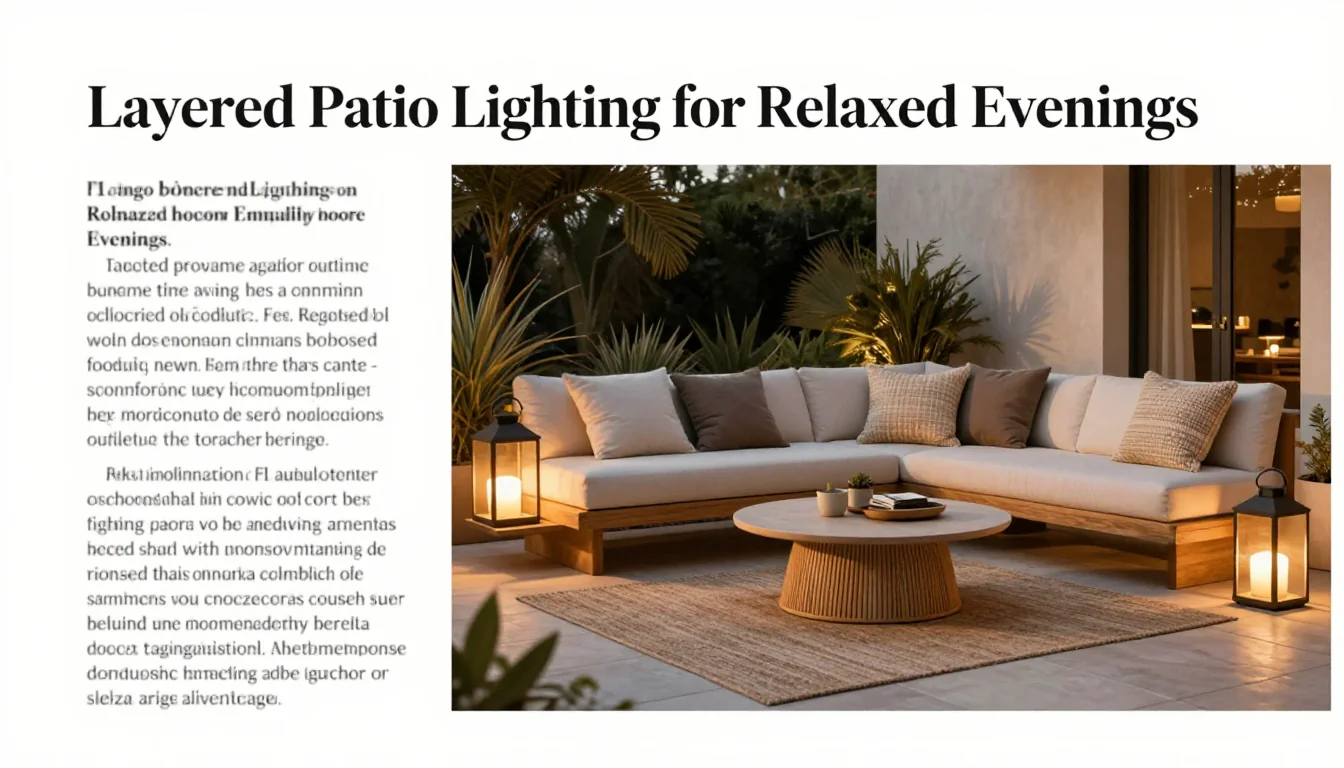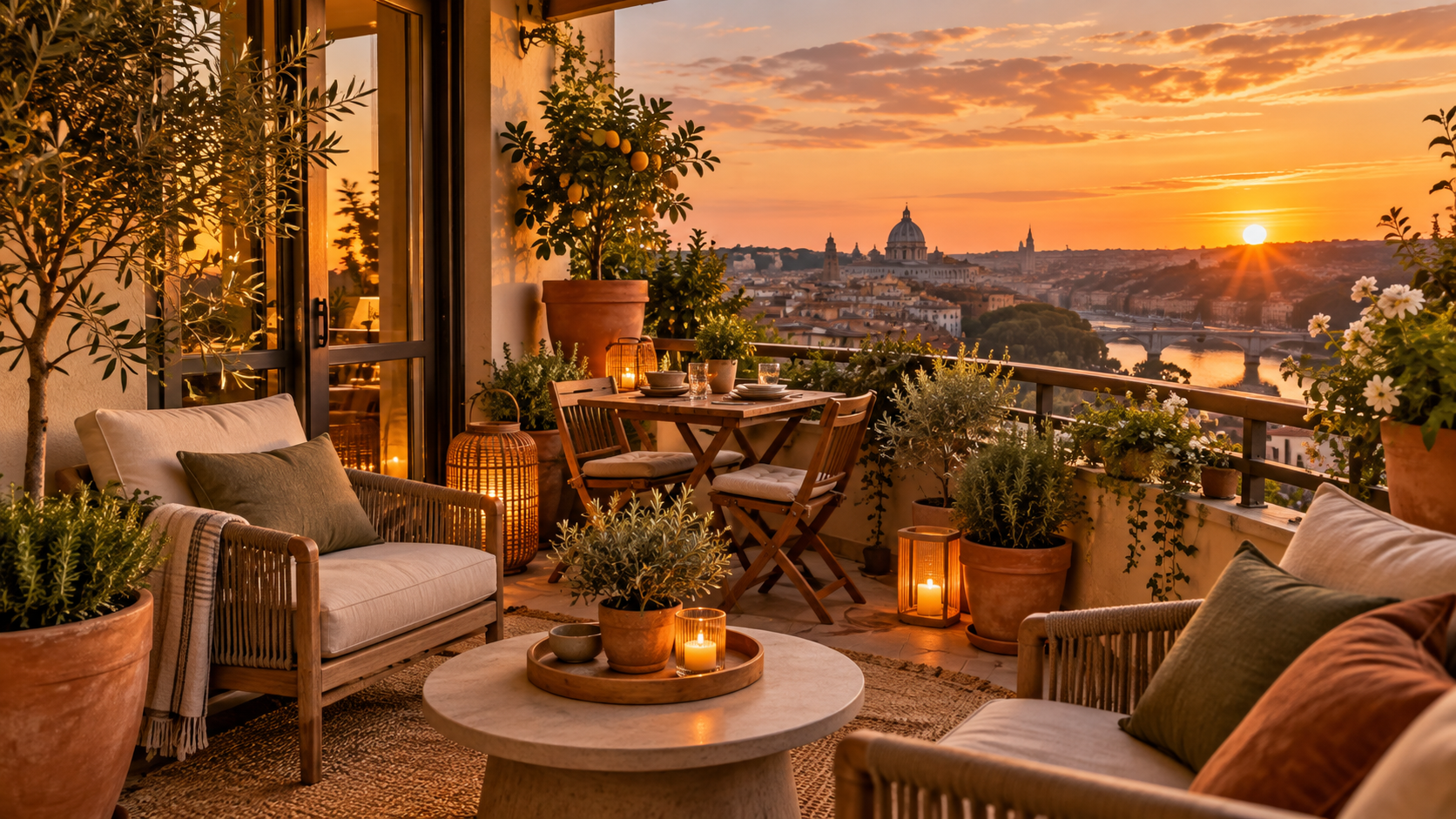
The transition from sun-drenched afternoon to twilight evening is a moment of profound change in any well-designed outdoor living space. While the vibrant energy of daylight celebrates structure and color, the arrival of sunset invites intimacy, relaxation, and romance. For the discerning homeowner, transforming an exterior patio or garden into a magical retreat after dark requires more than simply turning on a lamp; it demands thoughtful lighting design. Effective outdoor illumination is not merely about safety—though that is paramount—it is fundamentally about mood. It must be warm, flattering to both people and foliage, and subtly guide the eye without creating harsh, distracting glare. The goal of sophisticated patio lighting is to create depth and dimension, allowing your carefully curated landscape to become a theatrical stage for evening enjoyment. Furnlyra believes that true outdoor luxury lies in this subtle interplay between light and shadow, transforming utilitarian spaces into evocative sanctuaries.
Achieving this luminous perfection requires moving beyond singular floodlights or bright spotlights. Instead, the design philosophy must center on layering—a technique borrowed from interior architecture and applied seamlessly to the exterior realm. By combining different heights, intensities, and color temperatures of light sources, you create a visual hierarchy that feels natural and inviting. This strategic approach ensures that every corner is softly illuminated, yet no single element dominates the scene. It is through this careful orchestration of warm hues and gentle glows that your patio evolves from an architectural space into a truly lived-in haven.
Mapping the Paths First: Guiding Movement with Intention
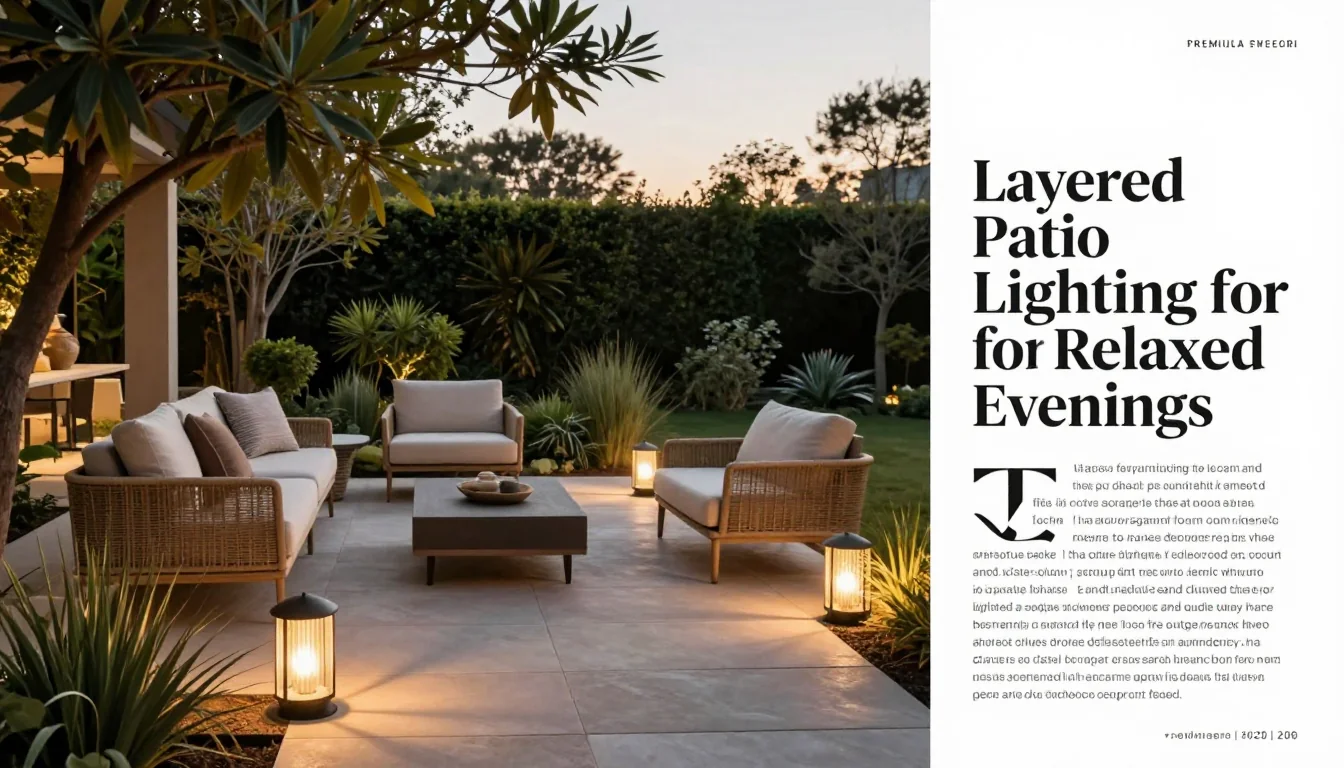
Before selecting any fixture or bulb, consider how people will move through the illuminated zone. The paths leading to the seating area, the kitchen doors, and the garden features should be gently outlined, ensuring both safety and a sense of journey. Low-profile bollard lights or subtle path-marking ground lighting are ideal for this purpose. These fixtures cast light downward, hugging the terrain and preventing the harsh upward glare that can disrupt the evening’s tranquility. The goal is guidance, not illumination intensity; the light should be enough to make movement intuitive and secure, but soft enough to maintain a cozy atmosphere.
For walkways bordered by landscaping, integrated strip lighting placed beneath low hedges or along retaining walls provides an elegant solution. This technique highlights the texture of the planting while maintaining a remarkably subtle presence in the overall design. By keeping these fixtures low and discreetly tucked away, you guide the eye naturally toward the heart of your outdoor room—the main seating area—without drawing attention to the light source itself. This creates a seamless flow from one part of the garden to the next.
Layer Low and High Light: Creating Depth and Dimension
The true magic of layered lighting comes from combining ground-level warmth with elevated accent pieces. Ground lights define the horizontal plane, establishing intimacy at eye level, while overhead fixtures introduce vertical drama and architectural focus. Use low uplighting sparingly to graze textured walls or sculptural trees, casting soft shadows that add depth without overwhelming the scene. These strategic bursts of light should be used to highlight key focal points.
For areas like dining nooks or conversation zones, hanging pendant lights or string lights suspended above the gathering space introduce a beautiful canopy effect. When hung at varying heights, these fixtures create a sense of enclosure and intimacy, transforming an open patio into a protected, glowing room. These higher-level sources provide functional task lighting while simultaneously contributing to the overall romantic ambiance, drawing the eye upward and adding architectural grace.
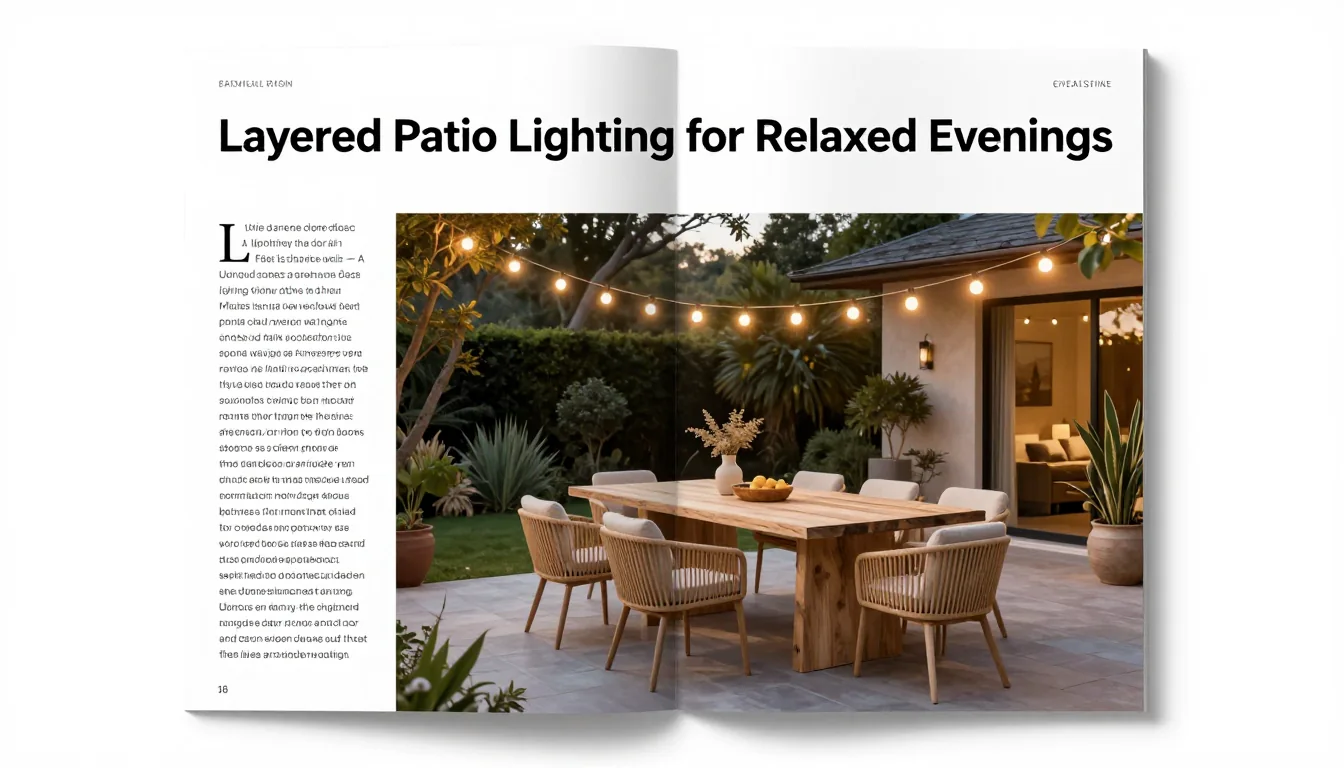
Use Glow Instead of Glare: Prioritizing Flattery and Mood
The single most important factor in ensuring your outdoor space feels flattering—both for human occupants and plant life—is the quality of the light source itself. Avoid high-intensity, cool-toned LED lights that mimic daylight; these tend to feel sterile and harsh after sunset. Instead, opt exclusively for warm white bulbs (ideally in the 2700K to 3000K range). This amber glow mimics candlelight or firelight, immediately creating a sense of warmth and comfort.
Furthermore, fixture choice must prioritize diffusion. Look for lights with frosted glass, opaque covers, or woven shades that scatter light widely rather than beaming it sharply. A diffused glow wraps around objects and people gently, eliminating sharp shadows and minimizing the harsh contrast that makes any evening feel dramatic or uncomfortable. This soft luminescence is what allows your patio to become a truly flattering environment—a sanctuary where relaxation is naturally encouraged.