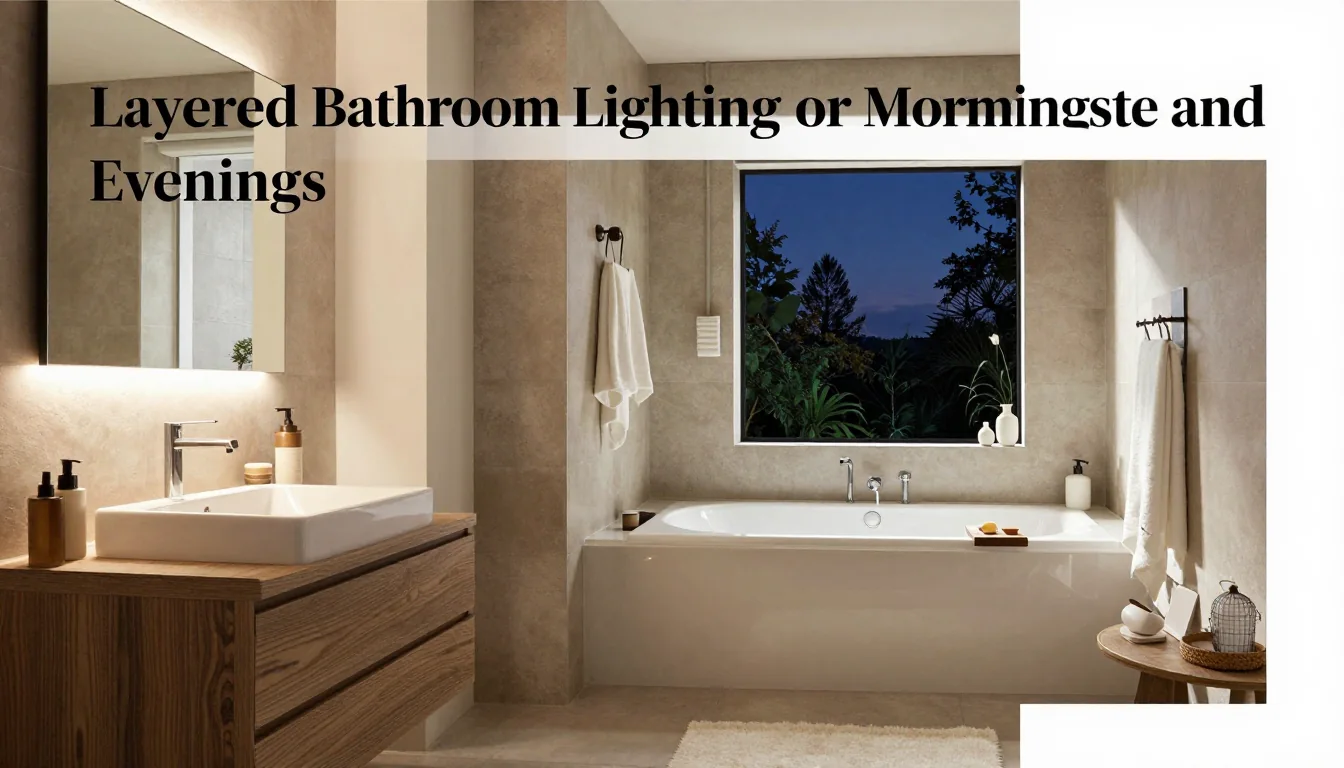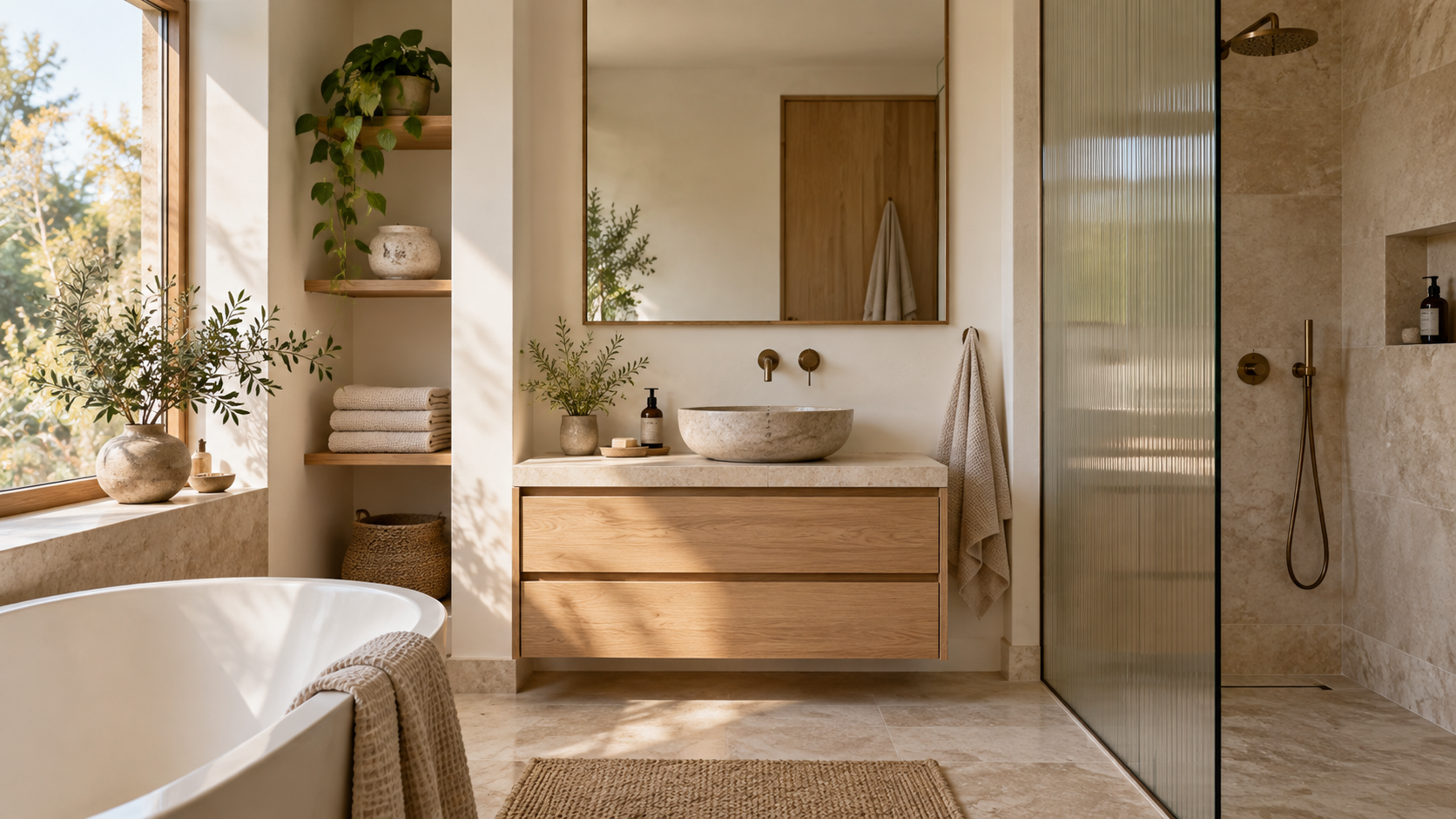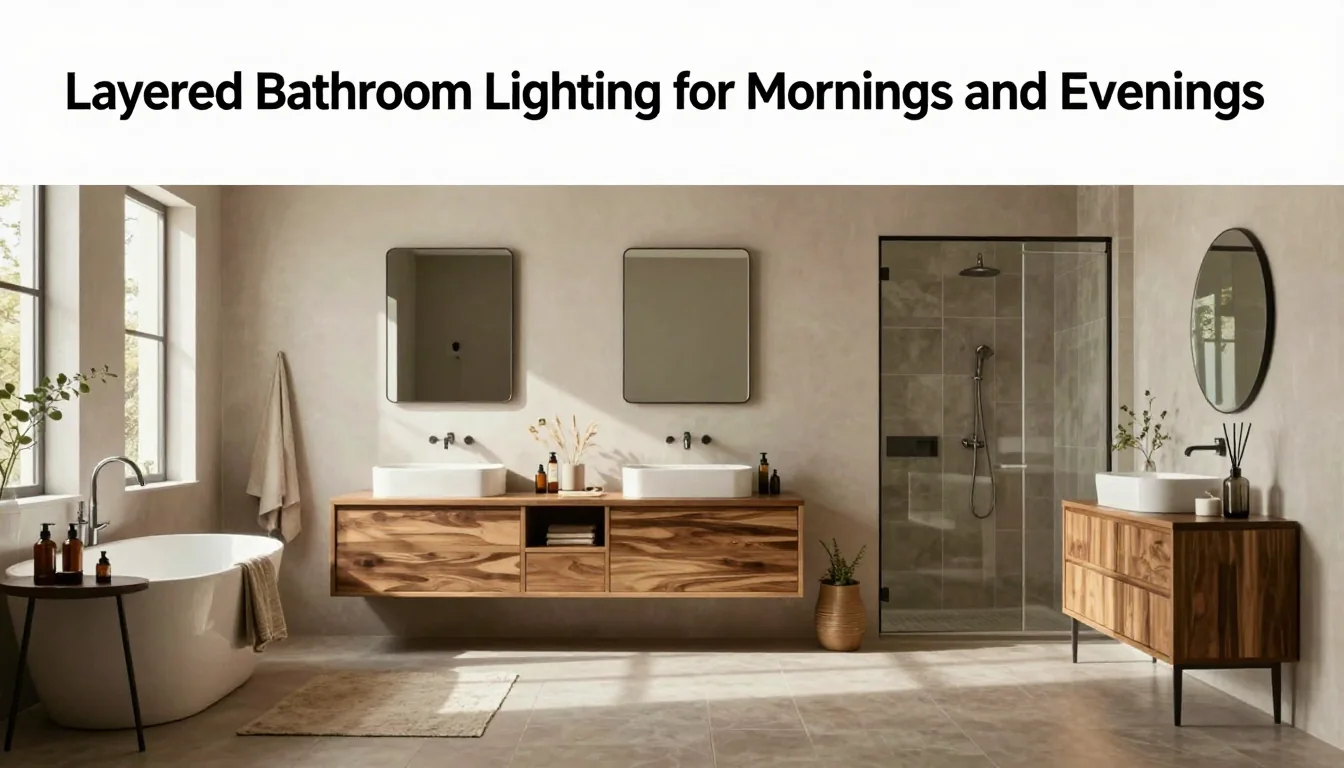
A well-designed bathroom moves beyond mere utility; it becomes a functional retreat that adapts to the rhythm of your day. The quality and placement of light are perhaps the most critical factors in achieving this dynamic quality. Good lighting doesn't just illuminate a space—it dictates mood, enhances skin tones during grooming, and promotes relaxation after a long day. This guide moves past superficial trends to offer practical strategies for integrating task, ambient, and accent lighting systems that serve both your morning routine and your evening calm.
The Task Layer: Precision for Grooming
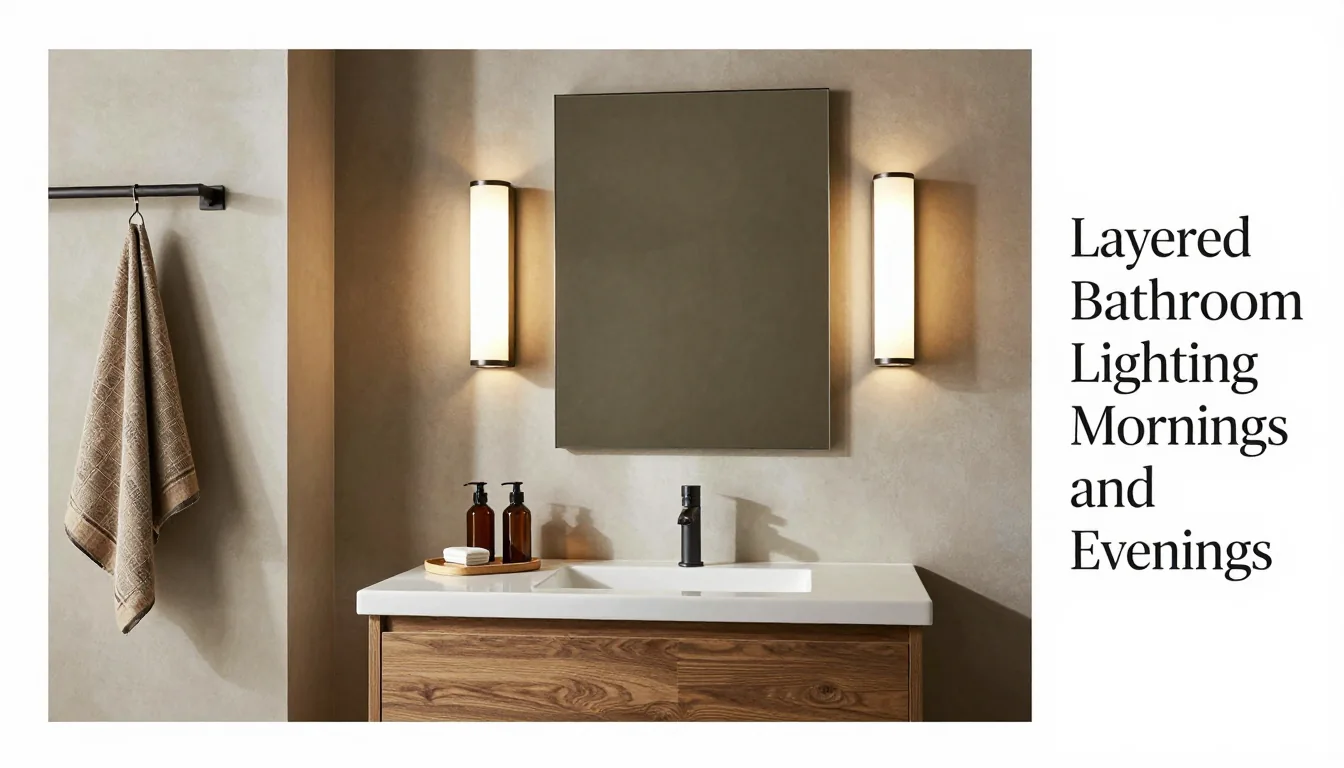
When the bathroom serves as a grooming station—for makeup application or shaving—the primary requirement is high Color Rendering Index (CRI) and even illumination. Aim for fixtures with a CRI of 90 or higher; this ensures that colors appear true to life, preventing frustrating discrepancies between how your skin looks in daylight and under artificial light. Common mistakes include relying solely on harsh overhead spotlights, which cast unflattering shadows under the eyes and nose. Instead, prioritize lateral lighting sources mounted directly beside or above the mirror.
For vanity setups, consider integrated LED strips positioned 6 to 12 inches from the sides of a large mirror. These provide shadow-free illumination across the face. The ideal color temperature for high-detail grooming is typically between 3500K and 4000K (Neutral White). While warmer light feels cozier, it can distort skin tones slightly; neutral white offers the necessary clarity without feeling clinical. If you are renovating a space with existing recessed lighting, ensure that any task fixture provides at least 75 lumens per square foot directly over the mirror area.
A key trade-off when selecting task lighting is brightness versus glare. Extremely high lumen output can be visually jarring and cause eye strain during early morning use. To mitigate this, choose diffused fixtures—those with frosted covers or integrated diffusers that spread the light evenly rather than directing a sharp beam. If installing surface sconces, ensure they are positioned at roughly eye level (around 57–60 inches from the floor) to achieve optimal, balanced light distribution.
The Ambient Layer: Setting the Daily Tone
Ambient lighting is the soft, general illumination that fills the room and prevents dark corners. It should be subtle enough not to overpower the task lights but strong enough to make the space feel welcoming when no one is actively grooming. This layer is best achieved through strategically placed recessed downlights or a single, centrally mounted fixture with a wide spread angle. When transitioning from morning to evening, this ambient light provides the foundation of relaxation.
To achieve a calming transition suitable for evenings and unwinding, shift your color temperature dramatically downwards toward 2700K (Soft White). This warmer hue mimics candlelight or sunset and encourages physiological relaxation. If you have multiple lighting zones, utilize dimmable fixtures exclusively; this is the most practical way to transform the room's atmosphere without replacing hardware. A dimmer allows a single fixture to serve dual purposes—functional brightness by day, restful glow by night.
A common pitfall in ambient design is over-lighting, which results in a flat, institutional look. Instead of maximizing lumens, focus on minimizing contrast. Use bounced light where possible; for instance, placing reflective surfaces (like large mirrors or polished stone) opposite the main light source helps distribute soft illumination more effectively throughout the room without needing excessive fixtures. If your bathroom is small (under 40 square feet), avoid overly powerful downlights and opt instead for a single, well-distributed ceiling fixture.
The Accent Layer: Depth and Visual Warmth
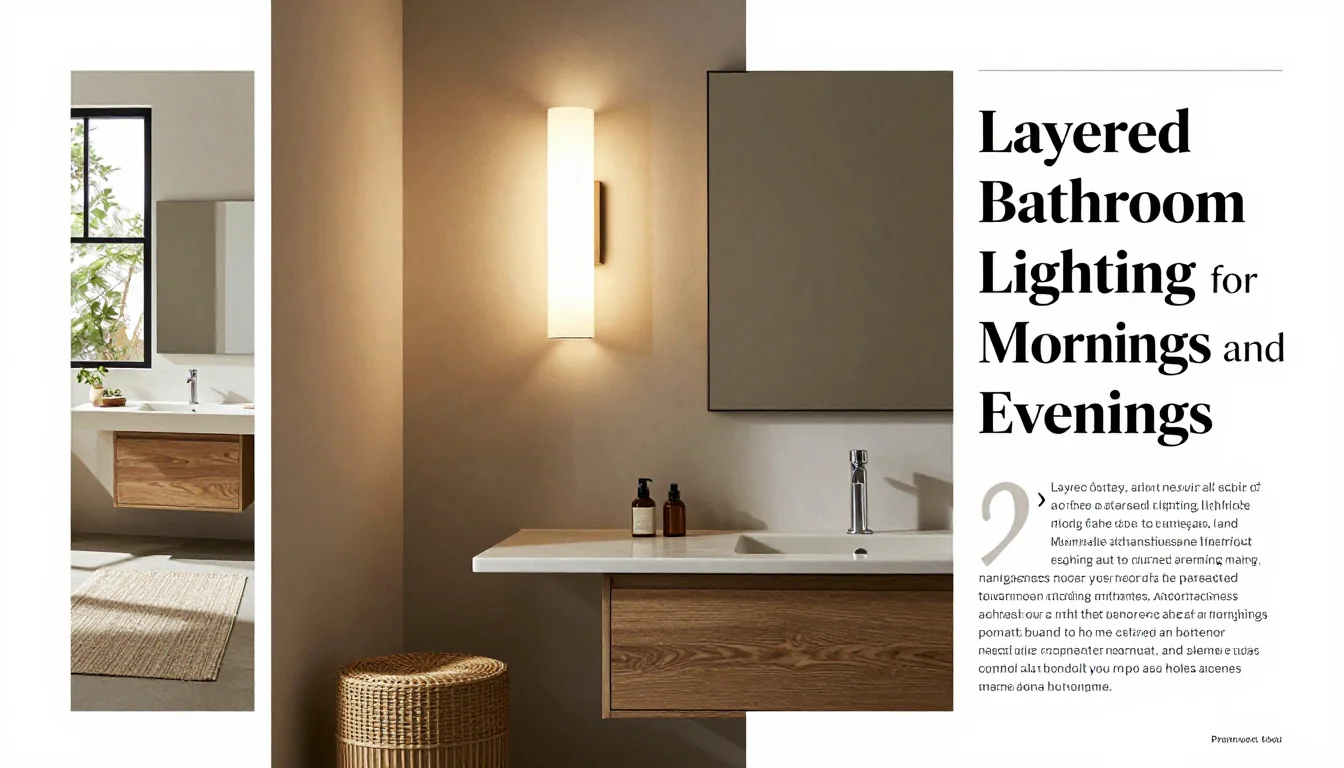
Accent lighting provides visual interest, drawing the eye to architectural features or decorative elements. In the bathroom context, this might mean highlighting a textured tile wall, illuminating an open shelving unit displaying ceramics, or providing subtle uplighting near a window. This layer is primarily aesthetic and should never be relied upon for primary task illumination.
For creating depth in a small space, consider utilizing linear LED strips hidden beneath floating vanities or along the baseboards. These indirect lights wash light up a vertical surface, making the room feel taller and more expansive while adding an element of sophisticated warmth—perfect for evening use. If you are highlighting artwork or a decorative mirror, choose narrow-beam spotlights (around 25 degrees) mounted strategically to graze the surface rather than simply illuminating it.
A realistic implementation involves pairing these accent fixtures with non-electrical elements. Placing small, warm-toned table lamps on counter space provides localized, low-level light that contributes significantly to a cozy evening mood without demanding high electrical power. When selecting finishes for these smaller pieces—such as brushed brass or matte ceramic—ensure they complement the material palette of your main fixture group to maintain visual cohesion across all three layers.