Achieving the feeling of a high-end spa in your home requires far more than simply adding expensive fixtures; it demands considered choices about function, texture, and light. The goal is not visual perfection captured in a single photograph, but a deeply functional environment that supports daily rituals while offering genuine calm. Before selecting a single decorative piece, the most crucial step is analyzing how you actually use the space. By addressing workflow and maximizing inherent architectural elements, even modest bathrooms can achieve an intentional sense of ease and luxury.
Optimizing Flow: Functional Layout and Intelligent Storage
The foundation of a truly restorative bathroom is unimpeded movement. Before introducing any décor, map out the functional zones—the showering area, the vanity/prep station, and the toilet zone. Ensure there is consistent clearance, ideally a minimum of 75cm (30 inches), between fixtures to allow comfortable navigation and opening drawers or cabinets without negotiating space. A common mistake is allowing storage units to encroach on these pathways; this immediately introduces friction into the daily routine. Prioritizing clear circulation allows the eye to rest and makes the room feel expansive, regardless of its actual square footage.
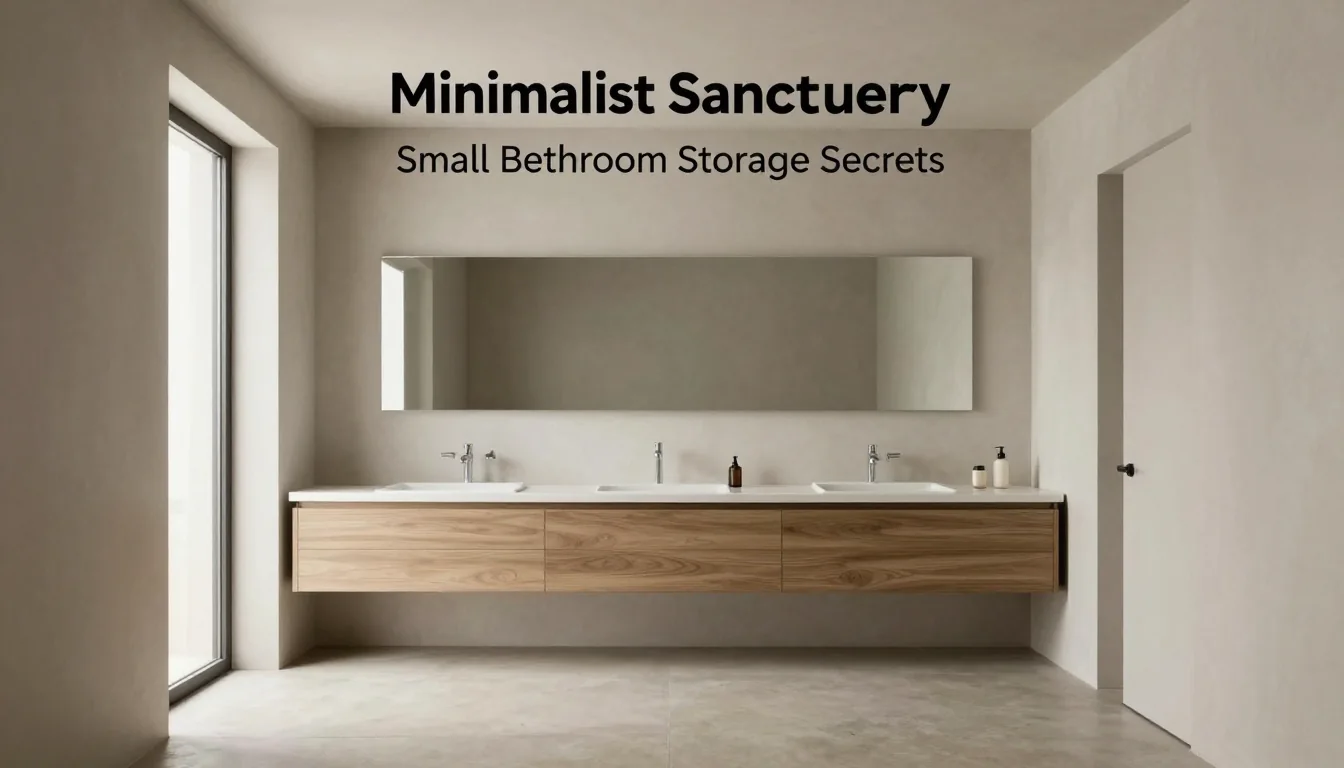
When planning storage, prioritize concealment over display. Open shelving can look beautiful but often results in visual clutter—a pile of half-used products or stray towels immediately undermines a serene atmosphere. Instead, invest in closed cabinetry that utilizes deep drawers for items like toiletries and linens. For smaller bathrooms, recessed niches carved into the shower wall are highly effective; they offer practical storage without protruding into the main showering area, preserving crucial floor space.
Consider verticality when limited by footprint. Tall, narrow linen towers or built-in units reaching near the ceiling maximize cubic footage for bulk items while maintaining a clean profile. A trade-off to consider is accessibility: deep cabinets are excellent for storage but require planning for how you will retrieve items. Utilize pull-out trays within vanity drawers to ensure frequently used products remain easily reachable, transforming hidden space into practical efficiency.
Layering Tactility: Selecting Materials and Finishes
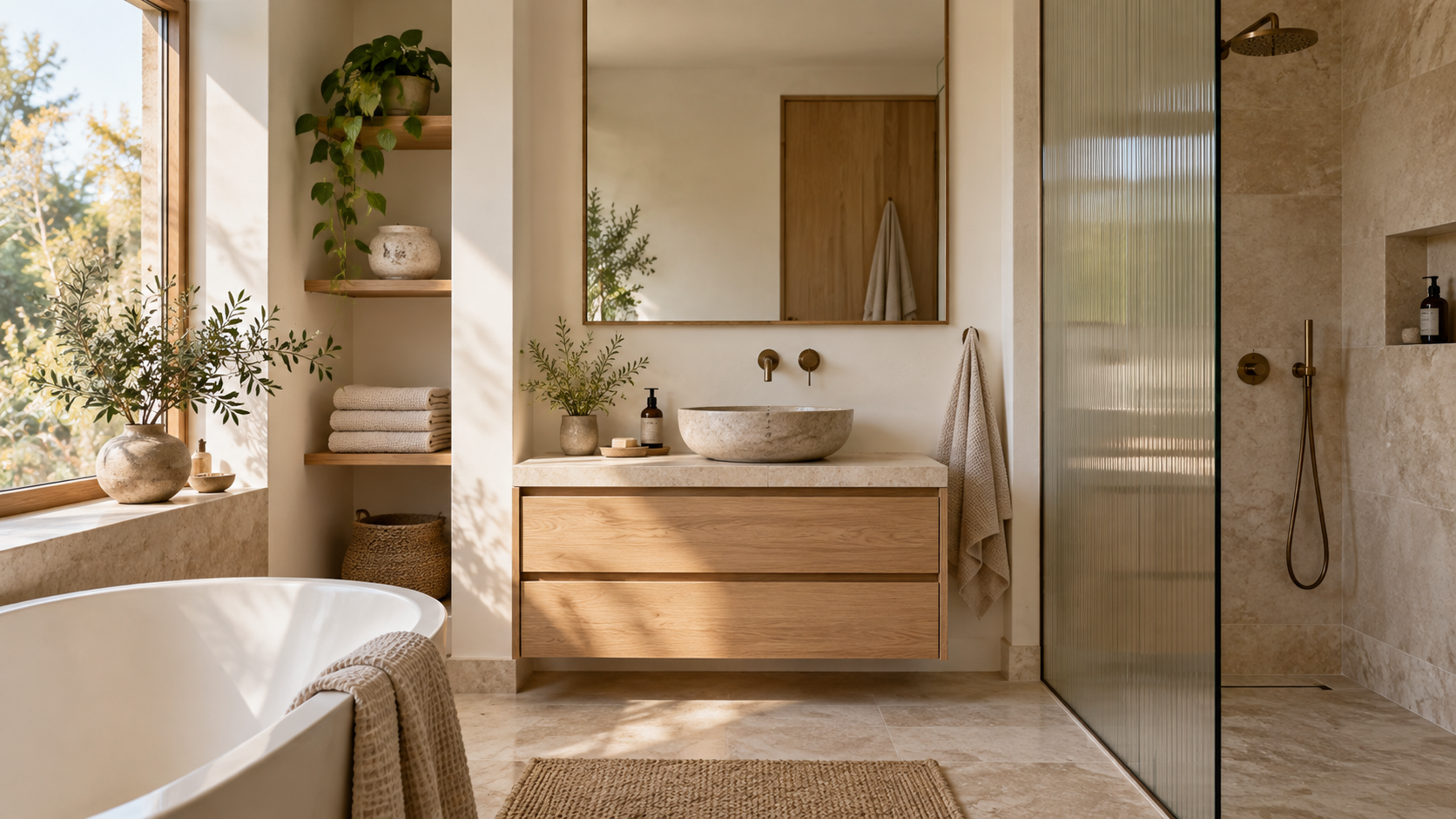
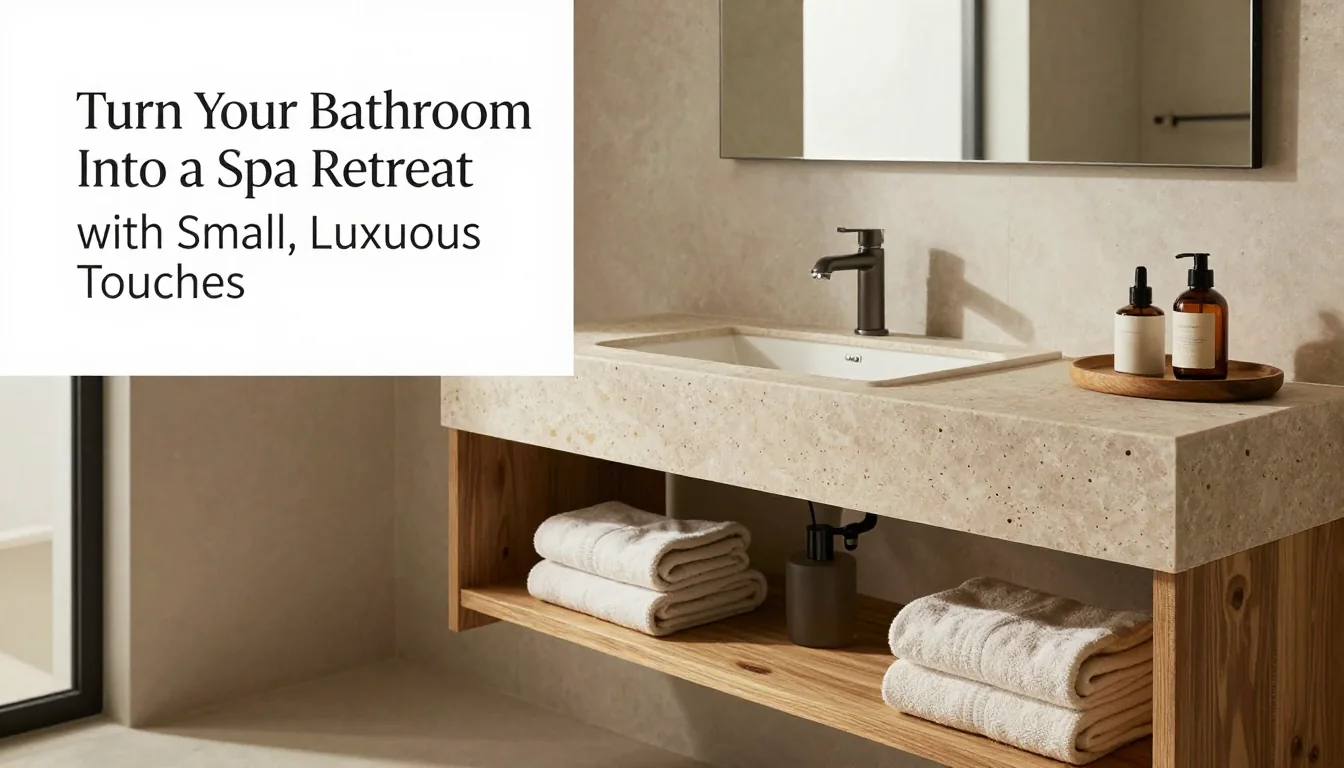
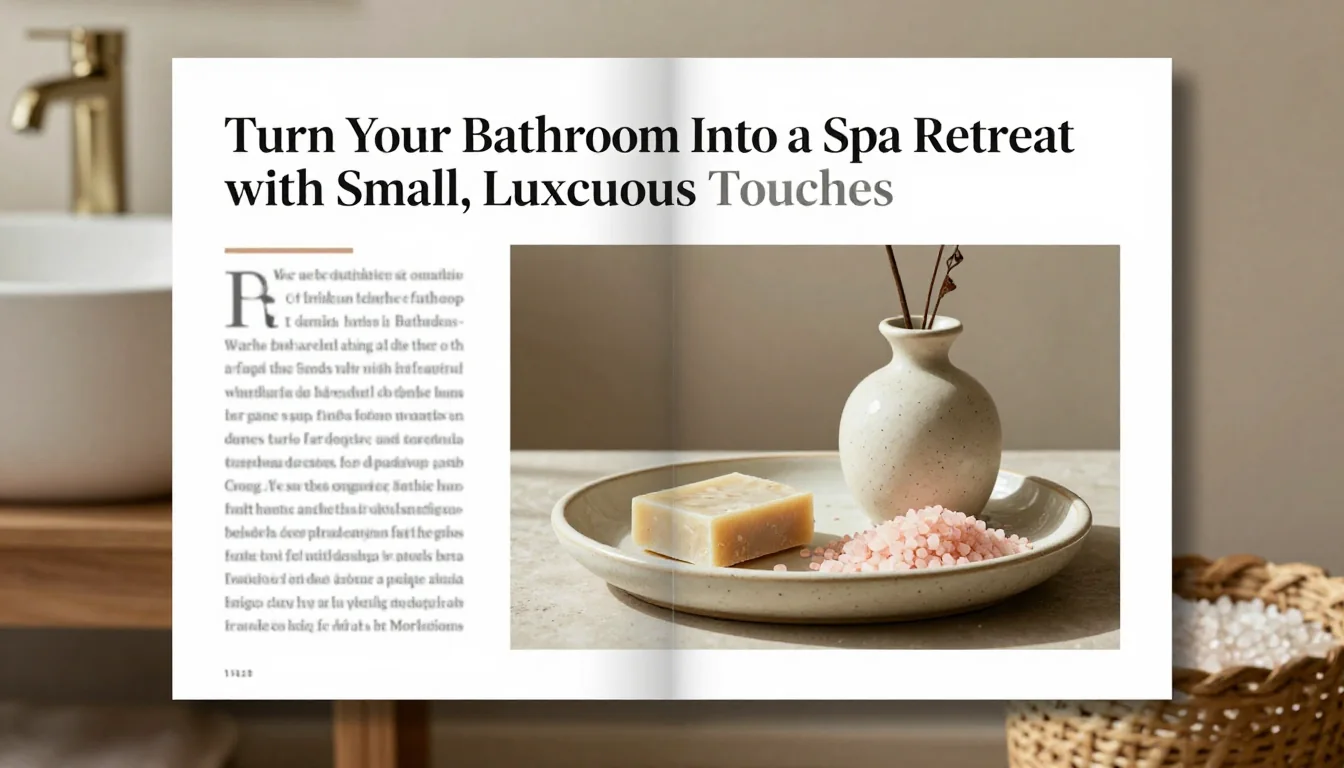
Luxury is often experienced through touch. To achieve a spa-like atmosphere, select materials that engage the senses gently. Rather than opting for high-gloss surfaces everywhere, which can feel sterile, focus on matte ceramics, honed natural stone (such as travertine or limestone), and softly brushed metals. Repetition in one or two core finishes—for instance, pairing warm oak cabinetry with brushed bronze fixtures—creates a visual rhythm that feels settled and intentional, rather than busy.
When introducing wood elements, choose species like white oak or walnut for their inherent grain patterns, which provide natural texture. If you are refinishing existing timber, always patch-test cleaning agents on an inconspicuous area first. For sealed woods (e.g., polyurethane finishes), use a damp cloth and mild soap; avoid harsh solvents that can cloud the finish. If using oil-based treatments, ensure excellent ventilation during application.
The metal hardware is a critical detail. Avoid overly shiny chrome, which reflects light harshly. Opt instead for muted tones like matte black, antique brass, or satin nickel. These finishes absorb light gently and contribute to a sophisticated patina over time. A common error is mixing too many metals; limit your selection to one primary tone (e.g., brushed brass) and use it consistently across faucets, towel hooks, and cabinet pulls for maximum cohesion.
Atmosphere Control: Lighting, Greenery, and Maintenance
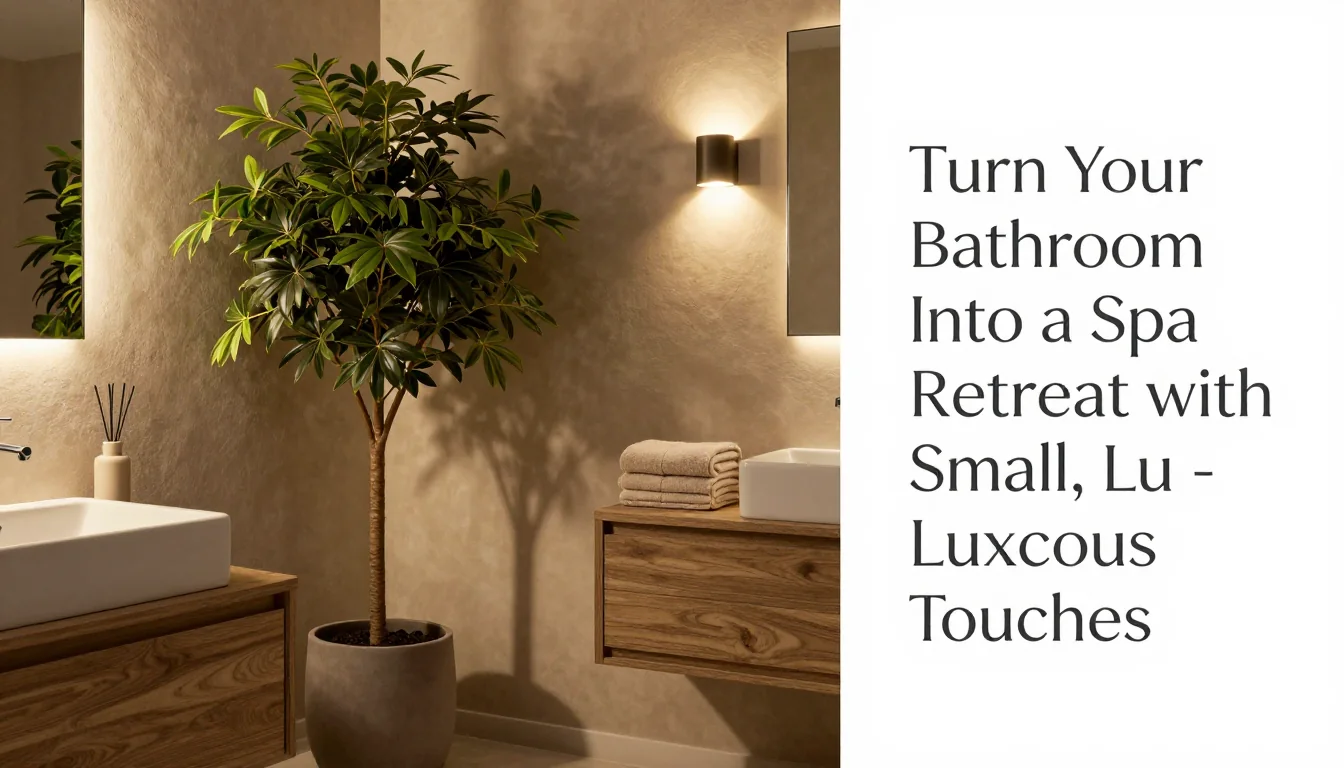
Lighting should be layered, not singular. A single overhead fixture casts harsh shadows; a spa-like feel is achieved through ambient light (soft, indirect illumination), task lighting (focused lights above the vanity mirror for grooming), and accent lighting (a small lamp on a counter). Use bulbs with a warm color temperature (around 2700K) to prevent the space from feeling clinical. Placement of fixtures should be strategic; under-cabinet LED strips can illuminate counters beautifully while minimizing glare.
Introduce greenery sparingly but deliberately. Plants add organic texture and life, instantly softening hard lines. For bathrooms, select species known for their low light tolerance and minimal maintenance needs, such as snake plants or ZZ plants. Avoid placing delicate flora near direct water spray. Containers should be treated as design elements themselves—choose matte terracotta or glazed ceramic vessels that complement the room’s material palette.
The final layer of luxury is effortless upkeep. Select shower panels and tiles with minimal grout lines, as these are maintenance hotspots. When cleaning stone surfaces, use pH-neutral cleaners specifically designed for porous materials; never mix commercial chemical products without explicit instruction, as this can create noxious fumes or damage the finish. A simple daily habit—wiping down splash zones after showering—will prevent mineral buildup and ensure your sanctuary remains pristine.
Practical Planning Notes
Keep frequently used storage within arm’s reach of the vanity and allow a clear, dry path from shower to towel storage.
Material Perspective
Porcelain is durable and low-maintenance; natural stone is tactile but needs sealing and appropriate cleaners.
Before You Commit
Review ventilation, splash zones, closed storage, and layered lighting at the mirror.
For related, room-specific ideas, continue with the guides in this category or return to the Furnlyra home page.